






What's Happening?
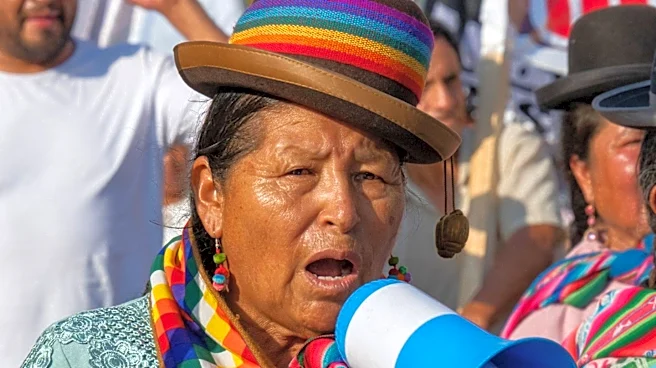
During COP31 in Turkey, indigenous representatives and climate experts voiced concerns that carbon trading schemes risk reinforcing colonial land systems, excluding women from decision-making, and undermining community control over ancestral territories.
Discussions at the Indigenous Peoples’ Pavilion, involving representatives from Africa, Asia, and other regions, questioned the effectiveness of carbon markets in delivering meaningful climate action. They argued that these mechanisms might instead create new avenues for corporate control over indigenous lands under the guise of environmental protection. The panel, including Edward Rockwaro, Tunga Rai, Eliza Morguera, Rosalia Harmona, and Stefan Torcel, examined the implications of carbon trading, particularly under Article 6 of the Paris Agreement, on communities whose livelihoods and cultural identities are deeply connected to land, forests, and natural ecosystems. A central concern is that carbon markets primarily value nature for its carbon storage capacity, often overlooking the social, cultural, spiritual, and ecological relationships indigenous communities have maintained with their territories for generations. Experts highlighted that over 90% of certain voluntary carbon credits examined were deemed 'phantom credits,' representing forest protection that would have occurred regardless of the projects.
Why It's Important?
The concerns raised by indigenous leaders at COP31 are critical because they highlight fundamental flaws and ethical dilemmas within the global carbon market framework, which is a key component of international climate action. If carbon markets disproportionately affect indigenous communities by undermining their land rights and traditional livelihoods, it could lead to significant social injustice and hinder effective, equitable climate solutions. The potential for 'phantom credits' and the unequal distribution of financial benefits also raise questions about the integrity and efficacy of these markets in genuinely reducing global emissions. If companies can purchase offsets without making substantial reductions in their own greenhouse gas emissions, it could create an illusion of climate responsibility, delaying necessary systemic changes. This situation could also exacerbate existing inequalities, with a disproportionate share of profits going to major technology companies and actors in the Global North, rather than to developing countries and local communities. The exclusion of women from decision-making in carbon agreements further compounds these issues, perpetuating gender inequalities and potentially leading to less effective and less equitable outcomes for climate projects.
What's Next?
The discussions at COP31 suggest a critical juncture for the future of carbon markets. Indigenous leaders and climate justice advocates are calling on governments to reconsider their reliance on these mechanisms. There is a growing debate within civil society organizations about whether to continue engaging in technical negotiations to improve safeguards or to redirect efforts towards alternative climate finance models. Some argue for strengthening legal challenges, public campaigns, and parliamentary scrutiny of carbon market investments, while others advocate for a complete shift towards public, grant-based support for climate finance, rather than dependence on private-sector buyers seeking carbon offsets. The credibility of COP31 and future climate negotiations will be measured by how governments address these concerns, particularly regarding the protection of indigenous rights, recognition of traditional knowledge, and support for indigenous leadership in environmental protection. The challenge for negotiators is to move beyond merely improving the integrity of carbon credits and market safeguards to confront the deeper question of whether climate action can deliver justice while allowing the commercialization of land, forests, and community resources.
Beyond the Headlines
The debate surrounding carbon markets extends beyond mere economic transactions, touching upon profound ethical, legal, and cultural dimensions. The commercialization of natural resources, particularly in indigenous territories, risks reducing complex ecological and cultural relationships to mere carbon assets, thereby devaluing centuries of traditional ecological knowledge and governance systems. This approach can perpetuate a colonial conservation model that prioritizes external control over community rights and local knowledge. The long-term carbon agreements, some extending to 30 years, raise concerns about the ability of communities to retain control over their territories and adapt to changing demographic and environmental needs. Furthermore, the lack of transparency regarding carbon brokers, buyers, and certification institutions, coupled with critical project documents not being translated into local languages, highlights a significant power imbalance. This situation can leave communities vulnerable to agreements they may not fully understand or have the power to reject, potentially leading to land loss and exclusion from financial benefits generated on their ancestral territories. The broader implication is a call for a paradigm shift in climate finance, emphasizing indigenous self-determination, customary land tenure protection, and direct community control over decisions and resources affecting their territories.