





What's Happening?
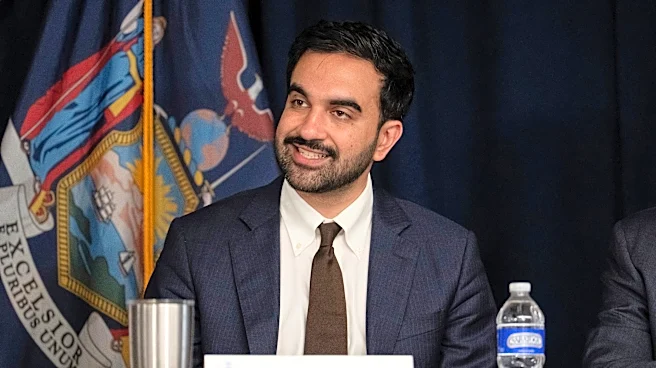
A Columbia Journalism Review study has revealed that Mayor Zohran Mamdani's administration maintains a secret Signal chat group with approximately 200 social media influencers. This group, which includes public school teachers, TikTokkers, and lifestyle
creators, reportedly receives inside information and directives from City Hall. The influencers, some of whom do not reside in New York City, use their platforms to promote the mayor's initiatives and policies. Examples include Sari Beth Rosenberg, a public school teacher and digital content strategist for the American Federation of Teachers, who posted an exclusive interview with Mayor Mamdani and Schools Chancellor Kamar Samuels to promote a one-year moratorium on generative AI in public schools. Other influencers, like Nile Berry and Diego León, have also engaged in promoting the administration's plans, such as the 'Block by Block' housing plan and city sanitation efforts.
Why It's Important?
This practice raises significant questions about transparency, ethical governance, and the blurring lines between public information campaigns and political advocacy. The use of a private chat to disseminate information to a select group of influencers, rather than through official public channels, could be seen as an attempt to control narratives and bypass traditional media scrutiny. This approach can influence public opinion without clear disclosure of the relationship between the influencers and the mayor's office, potentially misleading citizens about the impartiality of the content they consume. For New York City residents, this means that information about city policies and initiatives might be filtered through individuals who are not always transparent about their connections to the administration, impacting informed civic engagement and trust in local government.
What's Next?
The revelation of this secret influencer chat is likely to prompt increased scrutiny from media organizations, watchdog groups, and the public. There may be calls for greater transparency from Mayor Mamdani's administration regarding its communication strategies and its relationships with social media influencers. Ethical guidelines for public officials engaging with influencers, particularly in a non-disclosed capacity, may be debated and potentially revised. The influencers involved might face questions about their journalistic integrity and their responsibility to disclose their affiliations. This situation could also lead to a broader discussion about the role of social media in local politics and the need for clear distinctions between genuine grassroots advocacy and government-orchestrated messaging.
Beyond the Headlines
This development highlights a growing trend in modern politics where digital platforms and social media influencers are increasingly utilized for political messaging, often in ways that circumvent traditional media and regulatory frameworks. The use of a 'secret' chat suggests an intentional effort to manage public perception and potentially bypass critical analysis. This raises concerns about the integrity of public discourse and the potential for misinformation or biased information to proliferate under the guise of independent content. It also underscores the challenges faced by citizens in discerning credible information in an increasingly fragmented media landscape. The incident could serve as a case study for examining the ethical implications of government-influencer collaborations and the need for robust transparency measures to maintain public trust in democratic processes.