



What's Happening?
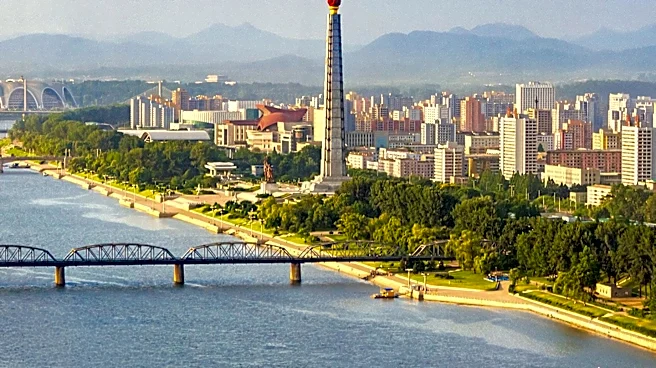
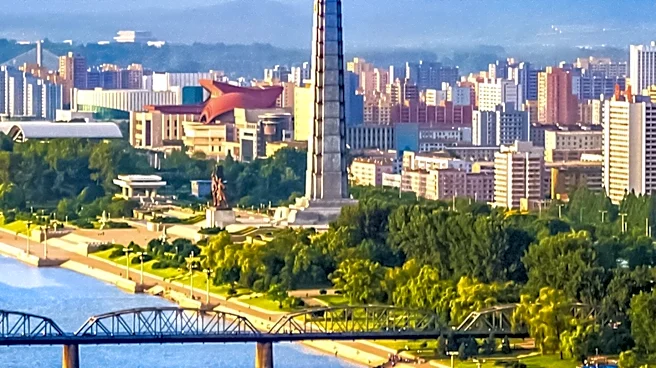
Recent satellite images have shown a significant increase in nighttime lighting in Pyongyang, North Korea's capital, over the past six years. This increase is primarily concentrated in the downtown area, while the outskirts remain largely dark. The expansion
in lighting is attributed to the regime's focus on showcasing new construction projects, such as the 50,000-home initiative announced by Kim Jong Un. Despite the brighter city center, the overall power supply in North Korea remains limited, with the country relying heavily on hydropower and facing challenges such as aging infrastructure and deforestation.
Why It's Important?
The disparity in nighttime lighting between Pyongyang's downtown and its outskirts reflects the uneven distribution of resources and the regime's prioritization of propaganda over equitable development. The focus on illuminating the capital's core areas highlights the regime's desire to project an image of progress and modernization, despite the ongoing challenges faced by the broader population. This situation underscores the broader issues of resource allocation and infrastructure development in North Korea, where the regime's priorities often do not align with the needs of its citizens.