








What's Happening?
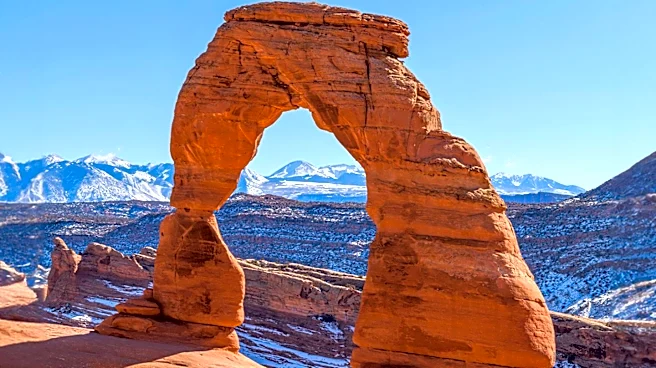
Arches National Park has announced that it will no longer require timed-entry reservations for visitors in 2026. This decision, made public on February 18, 2026, means that visitors can now enter the park at any time during operating hours without a prior
booking. This change marks the end of a system that had been in place in various forms since 2022, initially as a pilot program to manage congestion and distribute visitation throughout the day. While timed-entry reservations are no longer needed, a valid entrance pass is still required. Reservations will continue to be necessary for Devils Garden Campground and for Fiery Furnace hikes.
Why It's Important?
The elimination of timed-entry reservations at Arches National Park significantly impacts visitor access and planning for one of Utah's most popular natural attractions. While it offers greater flexibility for spontaneous visits, it also means visitors should anticipate potential entrance lines and limited parking, especially during peak times like weekends and holidays. The National Park Service's previous pilot programs aimed to reduce congestion, and without this system, the park may face renewed challenges in managing visitor flow and protecting its delicate environment. This change could lead to increased visitation, potentially boosting local tourism economies in areas like Moab, but also placing greater strain on park resources and infrastructure.
What's Next?
Visitors to Arches National Park in 2026 should plan for potential delays at the entrance and be prepared for parking challenges, particularly during busy periods. The park advises arriving early or late and encourages after-hours visits to experience its Dark Sky Park designation. Staff may temporarily restrict access to specific locations if parking areas become full. Reservations for Devils Garden Campground and Fiery Furnace hikes remain mandatory. Travelers from Provo and other distant locations are encouraged to check the park's official website and webcams for real-time alerts and conditions before embarking on the approximately 3.5 to 4-hour drive to avoid wasted trips.
Beyond the Headlines
The decision to remove timed-entry reservations at Arches National Park reflects an ongoing debate within the National Park Service and among conservationists about balancing visitor access with resource protection. While reservation systems can mitigate overcrowding and enhance visitor experience, they can also create barriers for spontaneous travelers and local communities. The return to open access at Arches could serve as a case study for other popular national parks grappling with similar issues of high visitation. It highlights the complex interplay between tourism, environmental stewardship, and public access, and the continuous search for optimal management strategies that preserve natural wonders while allowing people to experience them.