






What's Happening?
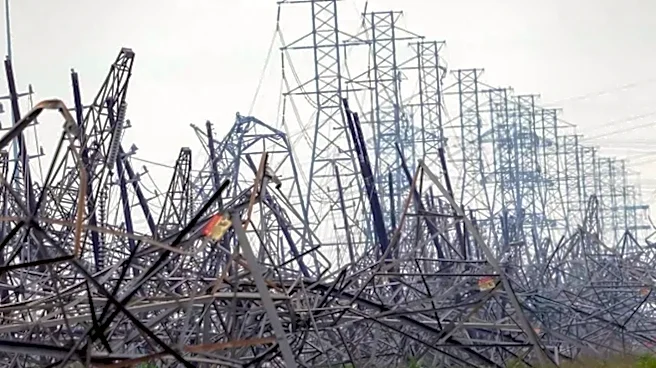
Severe storms are causing widespread power outages across several U.S. states, including Oregon, California, and New York. In Oregon and California, strong coastal winds, with gusts up to 70 mph in northern California’s Shasta Valley and 65 mph along
the southern Oregon coast, are toppling trees and power lines. PowerOutage.com reports nearly 3,000 residents without power in Oregon, primarily in the southwestern region, and over 16,000 customers affected in northern California. Pacific Power has advised customers to prepare for up to 72 hours without essential services and to sign up for outage alerts. Meanwhile, heavy, wet snow in upstate New York has already knocked out power in Otsego, Chenango, and Delaware counties, with over 20,000 customers currently affected. Forecasters warn that snow clinging to trees could lead to further outages.
Why It's Important?
These widespread power outages pose significant challenges for residents and local economies in the affected regions. For individuals, prolonged outages can disrupt daily life, impacting access to heating, communication, and essential services. Businesses may face closures, leading to economic losses and supply chain disruptions. The advisories from utility companies like Pacific Power, urging preparedness for up to 72 hours without power, highlight the potential for extended disruptions, which can strain emergency services and community resources. The combination of high winds and heavy snow underscores the vulnerability of infrastructure to extreme weather events, prompting concerns about resilience and the need for robust emergency response plans. The economic impact could be substantial, particularly for small businesses unable to operate during outages.
What's Next?
Utility crews are on standby and actively responding to storm damage, with restoration efforts expected to continue as weather warnings expire. Residents are urged to stay away from fallen power lines and report them to 911, as they can remain energized and dangerous. Pacific Power recommends that customers have an emergency plan and be prepared for up to 72 hours without essential services. Forecasters anticipate that snow will continue to accumulate in parts of central New York, with the heavy, wet nature of the snow potentially causing further isolated power outages, particularly in areas like Schoharie County. The National Weather Service continues to issue high wind warnings, indicating that travel will remain difficult, especially for high-profile vehicles, until conditions improve.
Beyond the Headlines
The recurring nature of severe weather-induced power outages across the U.S. highlights a broader issue of infrastructure resilience in the face of a changing climate. The emphasis on individual preparedness for extended outages, such as having emergency kits and plans, points to a growing societal expectation for self-reliance during crises. This situation also brings to light the critical role of utility companies in maintaining and upgrading infrastructure to withstand increasingly frequent and intense weather events. The economic and social costs associated with these disruptions, from lost productivity to potential health and safety risks, underscore the need for long-term investments in grid modernization and climate adaptation strategies. The ethical implications of ensuring equitable access to power and support during such events also come into focus, particularly for vulnerable populations.