




What's Happening?
NASA's Viking mission in 1976, which involved the Viking 1 and Viking 2 landers, detected potential signs of microbial life on Mars. The mission utilized the Labeled Release (LR) experiment designed to identify metabolic activity by introducing a nutrient
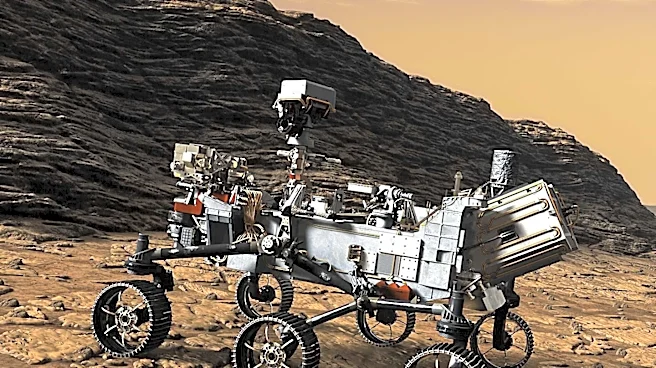
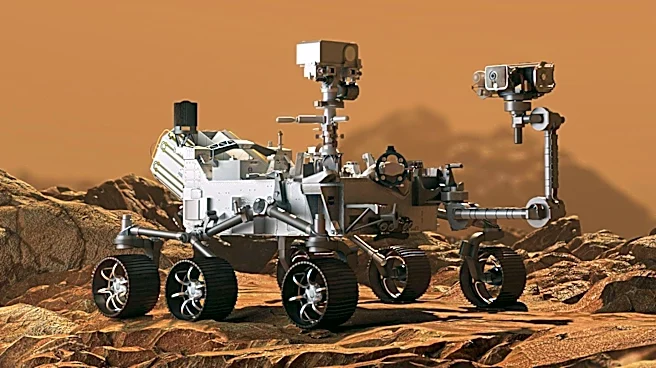
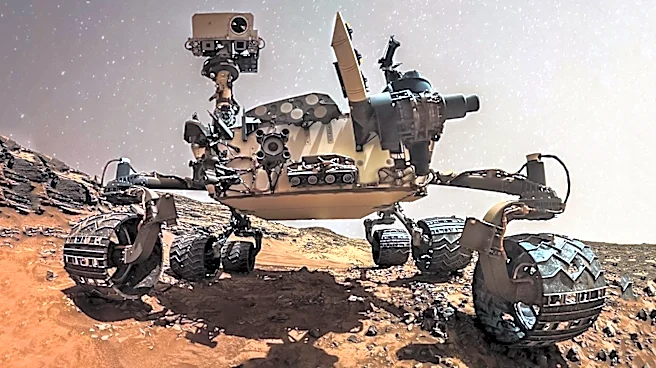
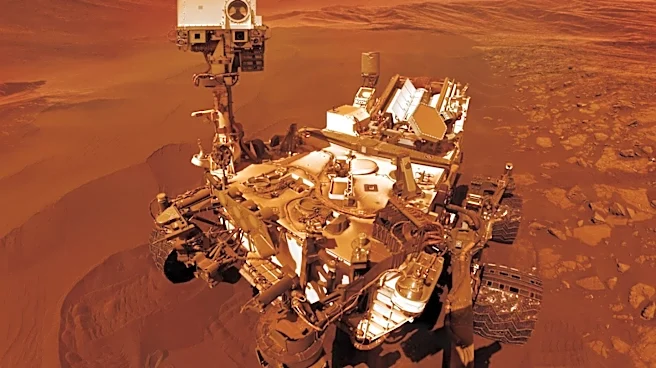
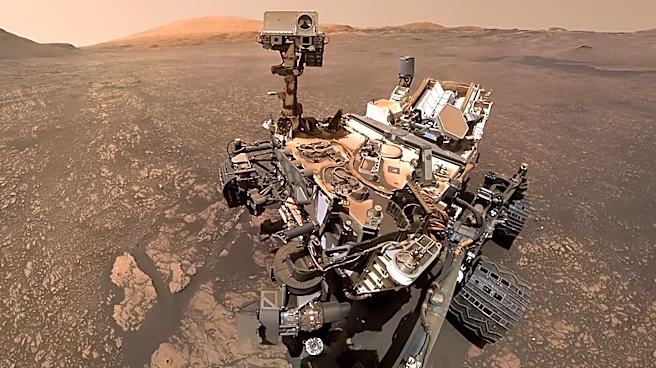
solution to Martian soil samples. The LR experiment recorded positive responses at both landing sites, indicating possible biological activity. Gilbert Levin, the principal investigator, argued that these results suggest the presence of microbial life on Mars, challenging the notion that Earth is the only planet with life. Subsequent missions, such as the Curiosity rover, have found seasonal methane spikes and organic molecules in Martian sedimentary rocks, further supporting Levin's interpretation. However, the scientific community remains divided, with some attributing the LR results to chemical reactions rather than biological processes.
Why It's Important?
The potential discovery of microbial life on Mars has profound implications for our understanding of life in the universe. If confirmed, it would suggest that life can exist beyond Earth, potentially in environments previously considered inhospitable. This could reshape scientific theories about the origins of life and the conditions necessary for its development. The findings also emphasize the importance of continued exploration and study of Mars, as understanding its environment and potential for life could inform future missions and the search for life on other planets. The debate over the Viking results highlights the need for advanced technology and methodologies in astrobiology to conclusively determine the presence of life on Mars.
What's Next?
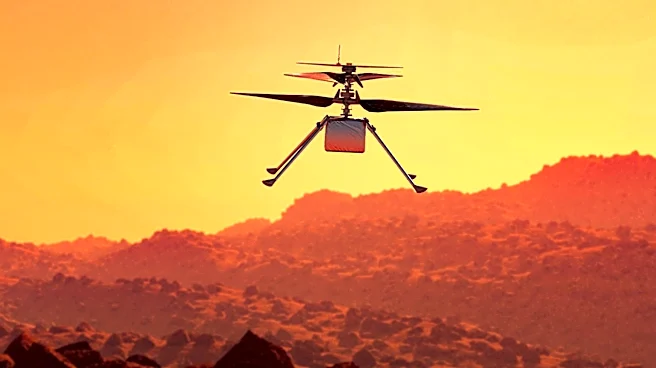
Future Mars missions are expected to focus on further investigating the planet's potential for life. NASA and other space agencies are planning missions that will carry more sophisticated instruments capable of detecting signs of life with greater accuracy. These missions aim to explore different regions of Mars, including areas with evidence of water, to gather more data. The ongoing debate about the Viking results underscores the importance of international collaboration in space exploration to pool resources and expertise. As technology advances, the scientific community hopes to resolve the question of life on Mars, which could have significant implications for future human exploration and settlement of the planet.