




What's Happening?
Recent advancements in spatial biology techniques are significantly enhancing the ability to analyze biological tissues at a molecular level. Key among these developments is the integration of Laser Capture Microdissection (LCM) with spatial transcriptomics.
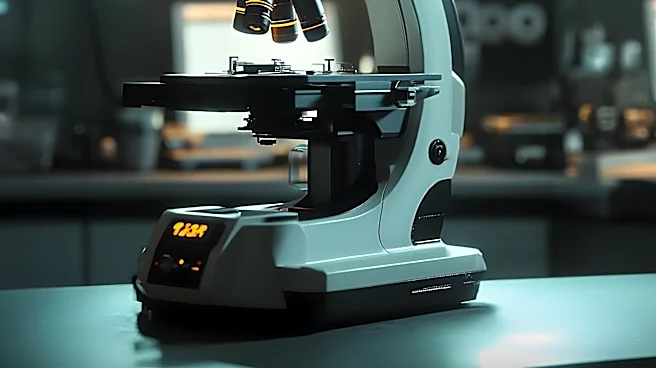
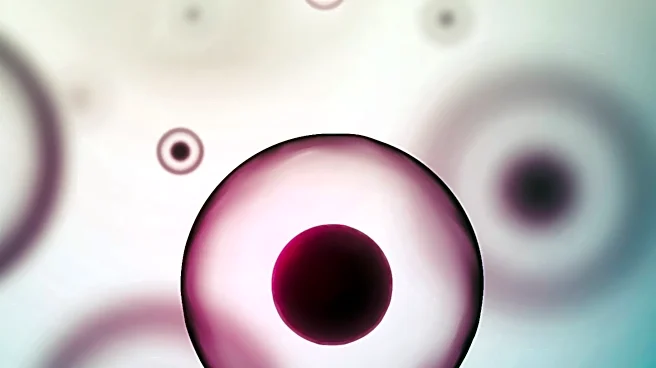
Spatial transcriptomics allows researchers to map gene activity across entire tissue sections, identifying specific regions or cell groups of interest. LCM then enables the precise isolation of these identified cells for more in-depth analysis. This combined approach facilitates a transition from broad tissue mapping to highly detailed, high-resolution molecular information. The Wellcome Sanger Institute, for instance, utilizes four Leica LCM machines to support over 40 users in various research areas, including cancer, infectious diseases, and fundamental biology. These systems are customized for controlled environments, seamless integration with imaging tools, and high-throughput workflows, allowing for complex experiments that standard instruments cannot handle. For example, Professor Mike Stratton's group uses LCM to study crypts in the colon to identify mutation patterns driving colorectal cancer, analyzing individual crypts to track mutation buildup and understand clone growth in early disease stages.
Why It's Important?
The integration of LCM with spatial transcriptomics is crucial for advancing biomedical research, particularly in understanding complex diseases like cancer. By providing high-resolution molecular data within the spatial context of tissues, this technology allows scientists to pinpoint exact locations where specific genes are active, similar to mapping active neighborhoods in a city. This precision is vital for identifying the origins and progression of diseases at a cellular level, which can lead to more targeted diagnostic tools and therapeutic strategies. For the U.S. healthcare and biotechnology sectors, these advancements mean the potential for developing more effective treatments and personalized medicine approaches. Researchers can gain a deeper understanding of disease mechanisms, leading to the discovery of new biomarkers and drug targets. This capability can accelerate drug development pipelines and improve patient outcomes, ultimately reducing healthcare costs associated with less effective, broad-spectrum treatments. The ability to analyze individual cell populations within their native tissue environment also minimizes the loss of critical spatial information, which is often a limitation in traditional bulk sequencing methods.
What's Next?
The future of spatial biology techniques, particularly LCM, involves continued integration with other advanced molecular and spatial biology approaches. While LCM is a mature technology, its impact is growing as it combines with newer methods to strengthen overall analytical capabilities. Researchers anticipate further developments in spatial omics and multiplexed imaging platforms, aiming to integrate microscopy with molecular imaging, histology, and pathology. This ongoing evolution will enable scientists to tackle even more complex biological questions, moving towards a more comprehensive understanding of tissue biology, health, disease, and development. The focus will likely be on refining these integrated workflows to increase throughput, improve resolution, and enhance the accessibility of these powerful tools to a broader scientific community. This could lead to a new era of discovery in fields ranging from developmental biology to neurodegenerative diseases, as the ability to precisely map molecular events in situ becomes more sophisticated and widespread.
Beyond the Headlines
The deeper implications of these spatial biology advancements extend beyond immediate research applications, touching upon ethical considerations and the broader scientific paradigm. The ability to dissect and analyze individual cells within their native tissue context raises questions about data privacy and the potential for highly personalized biological profiles. As these technologies become more powerful, the ethical frameworks governing their use in human tissue research will need to evolve. Culturally, this shift represents a move towards a more holistic understanding of biological systems, where context is as important as content. It challenges traditional reductionist approaches by emphasizing the intricate interplay of cells and molecules within their spatial environment. This paradigm shift could lead to a re-evaluation of how diseases are classified and treated, moving away from generalized categories towards highly specific, spatially informed interventions. The long-term impact could be a fundamental transformation in medical practice, where diagnostics and therapies are tailored not just to an individual's genetic makeup, but also to the precise spatial characteristics of their disease.