







What's Happening?
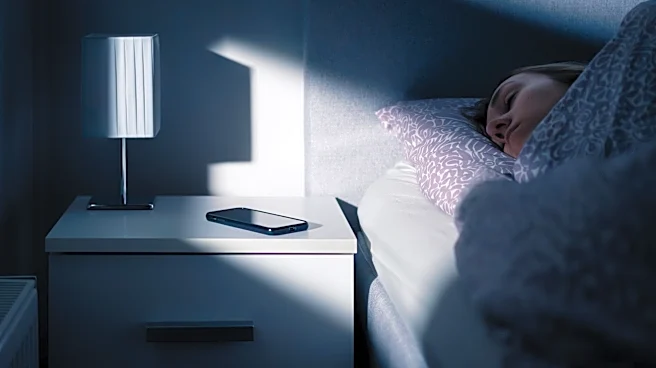
A new study published in the European Heart Journal, led by Professor Lu Qi of Tulane University’s School of Public Health and Tropical Medicine in New Orleans, has found that even dim bedroom light exposure during sleep can lead to adverse changes in heart
structure and function. The research, which utilized MRI scans of over 11,000 British adults from the UK Biobank, revealed that individuals exposed to the most nighttime light had a 2.4% greater left ventricular muscle mass and 1.5% greater average wall thickness compared to those who slept in near-total darkness. Additionally, a 1.9% decline in the heart muscle’s ability to contract was observed. These changes, known as concentric hypertrophy, are recognized signs of a heart under chronic strain and can precede symptoms of heart disease. The study defined 'dim light' as anything above 3 lux, which is enough light for closed eyes to detect. Sources of such light include streetlights filtering through blinds, alarm clock glows, and indicator lights on electronic devices. The association showed a gradient, with greater light exposure correlating with more pronounced heart changes.
Why It's Important?
This study provides crucial new insights into the impact of environmental factors on cardiovascular health, specifically highlighting the previously underappreciated role of nighttime light exposure. While prior research linked nighttime light to increased risk of cardiovascular disease, this is one of the first studies to directly demonstrate structural and functional changes in the heart muscle itself. The findings suggest that reducing nighttime light exposure could be a simple, inexpensive, and effective strategy for preventing heart disease, comparable in magnitude to addressing air pollution. This has significant implications for public health recommendations and clinical practice in the U.S., potentially leading doctors to inquire about patients' bedroom darkness and advise on measures like blackout curtains or covering electronic lights. The discovery that sleep duration only partially explains the association (24% to 49%) indicates that light at night disrupts the body's circadian rhythm through other pathways, affecting blood pressure, heart rate, hormone secretion, and inflammatory processes. This broader understanding of light's impact on biological clocks could lead to new research avenues and interventions for heart health.
What's Next?
The study's findings suggest that clinicians, particularly those treating patients with heart failure and atrial fibrillation, should begin asking patients about their bedroom darkness and exposure to screens after dark. Practical recommendations, such as using blackout curtains, warm-colored night lights, and covering small LED indicator lights on electronic devices, are simple and inexpensive steps individuals can take. Future research may focus on studying individuals who already have cardiovascular disease or are at high risk to further understand the impact of nighttime light. Additionally, more diverse populations need to be studied to confirm the generalizability of these findings, as the current study primarily involved white participants. The study also opens the door for cities to consider light pollution as an environmental hazard that can be controlled directly and at relatively low cost, potentially leading to policy changes regarding urban lighting. The long-term implications could involve a shift in public health campaigns to emphasize 'darkness as a vital sign' for cardiovascular well-being.
Beyond the Headlines
The study's findings underscore the profound and often overlooked connection between our modern illuminated environments and fundamental human biology. The disruption of the circadian rhythm by even minimal nighttime light highlights a deeper conflict between technological advancement and evolutionary adaptation. Humans evolved in cycles of natural light and darkness, and the pervasive presence of artificial light at night is a relatively recent phenomenon. This research suggests that our bodies, particularly the cardiovascular system, are still attuned to these ancient rhythms, and their disruption can have tangible physiological consequences. The comparison of nighttime light's impact to that of air pollution elevates its significance as an environmental health concern. This could lead to a broader re-evaluation of urban planning and design, encouraging 'dark sky' initiatives not just for astronomical observation but for public health. Ethically, it raises questions about the responsibility of individuals and communities to mitigate light pollution, not just for environmental reasons but for human well-being. Culturally, it might foster a renewed appreciation for darkness as an essential component of a healthy lifestyle, challenging the 24/7 illuminated society.