



What's Happening?
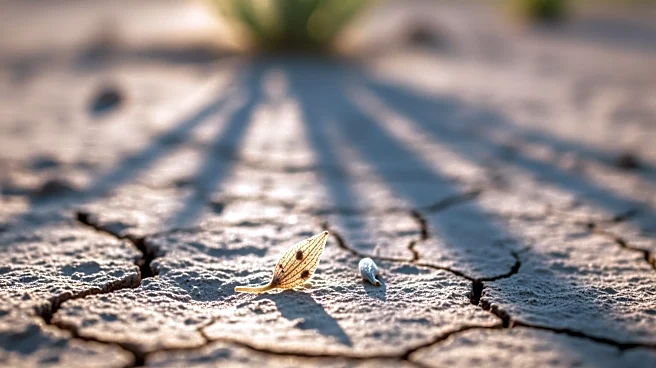
Naomi Fraga, a botanist from the California Botanic Garden, has successfully located seeds of the rare Death Valley sage for the first time since 2009. The plant, known for its silvery-green leaves and deep purple flowers, is difficult to study due to its remote
habitat and sporadic flowering. Fraga's discovery comes during a significant desert bloom, providing a rare opportunity to collect seeds for conservation. The Death Valley sage's habitat is protected within Death Valley National Park, but climate change poses a threat to its survival.
Why It's Important?
The successful collection of Death Valley sage seeds is crucial for conservation efforts, as the plant is vulnerable to climate change and habitat loss. Preserving genetic diversity through seed banking is essential for maintaining ecological balance and resilience. Fraga's work highlights the challenges faced by conservationists in protecting rare species amid changing environmental conditions. The findings underscore the importance of proactive measures to safeguard biodiversity in the face of climate change.
What's Next?
Naomi Fraga plans to return with a team to conduct a large-scale seed harvest, which will be stored in a seed vault for future conservation efforts. Continued monitoring of the Death Valley sage and its habitat will be necessary to assess the impact of climate change and develop strategies for its protection. Collaboration with other conservation organizations and government agencies may be needed to ensure the long-term survival of this rare species.