








What's Happening?
The University of Arizona (U of A) is providing New World screwworm testing kits to livestock producers at nearly all U of A Cooperative Extension locations to aid in detection efforts. This initiative comes as four cases of New World screwworm have been
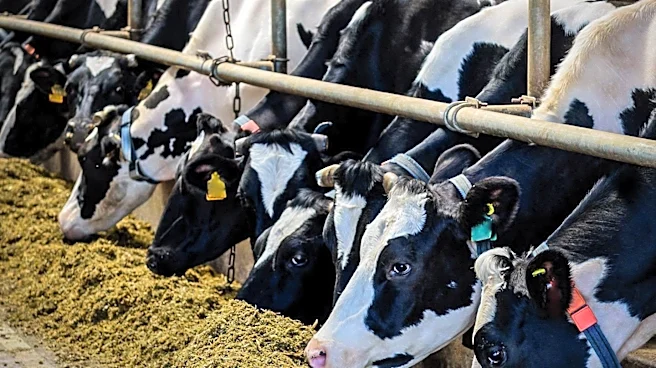
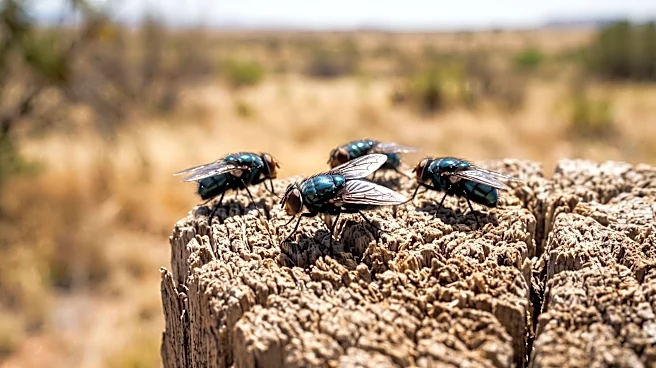
confirmed in Arizona, prompting animal health officials to monitor for the parasite and take steps to prevent its spread. The New World screwworm is a parasitic fly whose larvae feed on the living tissue of warm-blooded animals, entering through open wounds and causing serious damage if left untreated. Flavie Audion, a rangeland management specialist at the University of Arizona, explained that the screwworm feeds on live flesh and can impact a wide range of animals, including cattle, sheep, goats, horses, dogs, cats, wildlife, and potentially humans. When a case is confirmed, officials establish a mandatory 20-kilometer (12.4-mile) Infested Zone around the detection, within which live animals cannot leave without authorization from the state veterinarian.
Why It's Important?
The availability of New World screwworm testing kits from the University of Arizona is a critical step in controlling the ongoing outbreak in the Southwest. Early detection is paramount for preventing the spread of this parasitic fly, which can cause severe harm and death to livestock and other warm-blooded animals. By empowering livestock producers with the tools to collect and submit samples, the U of A is directly supporting surveillance efforts and helping to protect Arizona's agricultural economy. The mandatory Infested Zones and movement restrictions highlight the serious economic and logistical challenges faced by ranchers and animal owners. This initiative underscores the vital role of academic institutions in providing practical solutions and support during public health and agricultural crises, bridging the gap between scientific knowledge and on-the-ground action.
What's Next?
Livestock producers can use the provided kits to collect maggot samples and send them to a laboratory for testing, facilitating rapid identification of the parasite. Veterinarians, livestock producers, and animal owners are required to immediately report suspected New World screwworm infestations, unusual larval sightings, or signs of parasites in open wounds to the Office of the State Veterinarian. Animal owners with concerns are advised to contact their veterinarian or the USDA. The U.S. Department of Agriculture (USDA) plans targeted sterile fly releases as part of its response strategy. Experts from various health and agriculture departments, including Pima Animal Care Center, Pima County Health Department, Arizona Department of Health Services, Arizona Department of Agriculture, and the University of Arizona, are scheduled to discuss the impact of New World screwworm on pets, livestock, and other animals, and how animal owners can help protect them.
Beyond the Headlines
The University of Arizona's initiative to distribute testing kits exemplifies a decentralized, community-based approach to disease surveillance, which can be highly effective in large, rural areas. This strategy not only aids in detection but also fosters greater engagement and responsibility among livestock producers, turning them into active participants in disease control. The re-emergence of the screwworm, a pest once eradicated through a sophisticated sterile insect technique, highlights the ongoing need for scientific research and development in pest management. The involvement of multiple agencies and academic institutions in addressing this outbreak underscores the complex, multi-faceted nature of modern biosecurity challenges, requiring collaboration across different sectors. This situation also brings to light the educational aspect of public health, as informing and empowering the public is crucial for effective disease prevention and control.