





What's Happening?
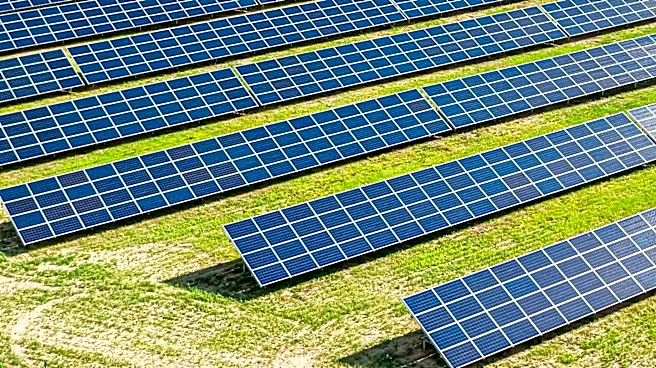
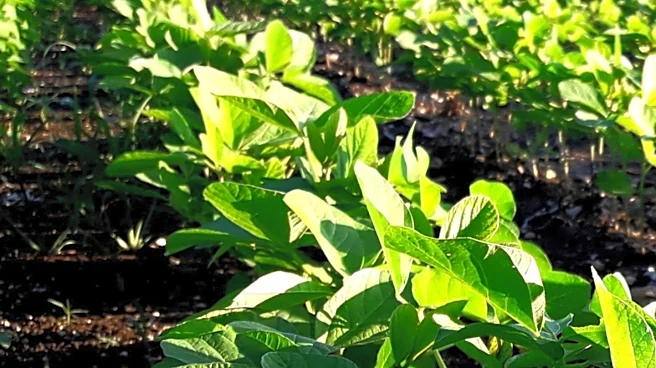
A new agrivoltaics project in Big Lake, Minnesota, is demonstrating the successful integration of farming and solar power generation. Winifred Sylvah, one of three farmers involved, has harvested significant amounts of produce, including 140 pounds of cucumbers,
from land situated between rows of solar panels. This initiative, a partnership between The Food Group, U.S. Solar, and Conexus Energy, allows farmers to lease land affordably while utilizing space that would otherwise be solely dedicated to solar arrays. The project, which began as a pilot in 2023, has now been made permanent, with farmers like Sylvah entering 10-year leases. This model addresses the challenge of land access for emerging farmers, many of whom are immigrants, by providing long-term stability and necessary infrastructure like irrigation systems and walk-in coolers. The success of the Big Lake Farm challenges the traditional view of solar and agriculture as competing interests, showing that both can thrive simultaneously on the same land.
Why It's Important?
This agrivoltaics project in Minnesota holds significant importance for several reasons. Firstly, it offers a viable solution to the increasing competition for land between agricultural and renewable energy sectors, particularly in rural areas. By demonstrating that farming and solar power can co-exist, it helps ease rural land politics and provides a 'social license to operate' for solar companies. Secondly, it supports emerging farmers, many of whom face difficulties in affording land, by offering affordable long-term leases and essential infrastructure. This stability allows farmers to experiment with crops and potentially pursue organic certification, fostering agricultural innovation and sustainability. Thirdly, the project's success in maintaining similar crop yields to traditional farming, as supported by research from Iowa State University Professor Ajay Nair, indicates a promising pathway for increasing food production while simultaneously expanding renewable energy capacity. This dual-purpose land use can contribute to both food security and climate change mitigation efforts in the U.S.
What's Next?
The success of the Big Lake agrivoltaics project is likely to inspire similar initiatives across the U.S., particularly as federal officials have reduced support for emerging farmers. The Food Group, a Minnesota-based nonprofit, has indicated that due to cuts in USDA grant programs aimed at supporting land and market access for new farmers, they will not actively pursue federal grants for the next couple of years. This shift in federal funding may prompt more local and private partnerships to explore innovative solutions like agrivoltaics to support agricultural communities and renewable energy goals. Farmers like Winifred Sylvah will continue to refine their practices, learning from each season, such as planning to use fabric to discourage weeds in the future. The long-term leases provided by the project will allow for continued experimentation and adaptation, potentially leading to optimized agrivoltaic farming techniques and crop selections that benefit from the partial shade provided by solar panels. The project's model could serve as a blueprint for other regions looking to maximize land use efficiency and promote sustainable development.
Beyond the Headlines
Beyond the immediate benefits of co-locating solar and agriculture, this project highlights deeper implications for land use, economic development, and social equity. The concept of agrivoltaics challenges conventional land management paradigms, suggesting a more integrated and symbiotic approach to resource utilization. Ethically, it promotes a more equitable distribution of land access, particularly for emerging farmers and immigrant communities who often face systemic barriers. The project's focus on West African crops, popular within Minnesota's Liberian community, also underscores its cultural significance, supporting diverse agricultural practices and local food systems. Furthermore, the collaboration between a nonprofit, a solar company, and an energy provider demonstrates a model for cross-sector partnerships that can drive sustainable development. This approach could lead to long-term shifts in how communities view and manage their land, fostering greater resilience in both food and energy systems while addressing social and economic disparities.