
What's Happening?
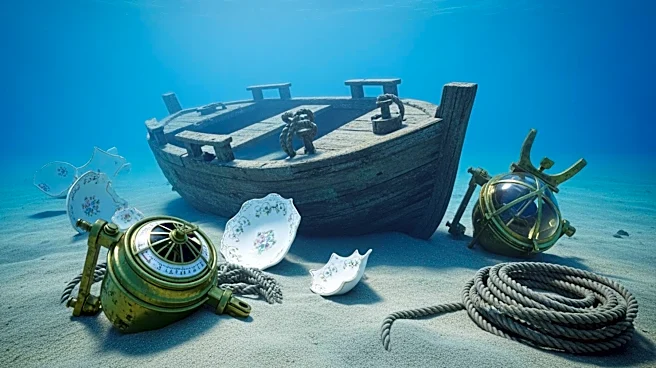
Archaeologists have uncovered a trove of Chinese porcelain and European-made goods from an 18th-century shipwreck off the coast of Norway. The discovery, made by watch designer Espen Saastad and a salvage
firm, includes porcelain bowls, goblets, textiles, and parts of chandeliers. The ship, dubbed the 'Porcelain Wreck,' is believed to have sunk in the mid-1700s and was found at a depth of 600 meters. The vessel is thought to be a galliot, a merchant ship common in Northern Europe. The wreckage also contained crates of tea, herbs, and medicines, as well as anchors, hawse pipes, and an iron stove. The reason for the ship's sinking remains unknown, and DNA analysis of grains found in the wreckage may help determine its origin.
Why It's Important?
The discovery of the Porcelain Wreck offers valuable insights into maritime trade and cultural exchange between Europe and Asia during the 18th century. The presence of Chinese porcelain and European goods highlights the global nature of trade routes at the time. This find is significant for Norway's maritime heritage, providing new information about the types of goods transported and the design of merchant vessels. The recovery effort demonstrates advancements in underwater archaeology, showcasing Norway's expertise in preserving cultural heritage. The artifacts recovered could contribute to research on historical trade practices and the economic impact of maritime commerce in Northern Europe.