







What's Happening?
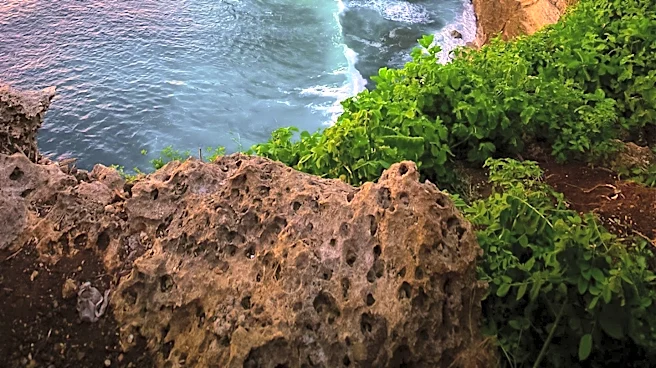
San Diego authorities are intensifying efforts to curb dangerous cliff jumping activities at Sunset Cliffs, a popular coastal area. Despite warnings and legal prohibitions, young people, often influenced by social media, continue to leap from heights
ranging from 15 to 50 feet into the ocean. This summer alone, at least three individuals required rescue after sustaining injuries, including a 17-year-old who suffered six fractured vertebrae and a badly bruised tailbone after hitting a rock ledge. The San Diego Police Department has issued over 50 citations and approximately 350 warnings since mid-June. Injuries and fatalities from cliff jumping at Sunset Cliffs have been recorded since the 19th century, with a notable recent death being 15-year-old Anthony Womack in 2019. Officials emphasize the illegality and extreme danger of these jumps, citing unpredictable tides, strong currents, rough surf, and hidden rocks as significant hazards.
Why It's Important?
The ongoing issue at Sunset Cliffs highlights a critical public safety concern in San Diego, straining emergency services and posing severe risks to individuals. The allure of social media-driven thrill-seeking is drawing an increasing number of visitors, including tourists, who may be unaware of the inherent dangers or disregard warnings. This trend not only jeopardizes the lives of jumpers but also places a burden on local law enforcement and rescue teams, who are already stretched thin. The debate between preserving youthful rites of passage and enforcing safety regulations underscores a broader societal challenge in managing risky behaviors amplified by online platforms. The repeated incidents, including serious injuries and past fatalities, demonstrate the urgent need for effective strategies to deter these activities and protect both residents and visitors.
What's Next?
San Diego authorities are expected to continue their increased enforcement efforts at Sunset Cliffs, issuing citations and warnings to deter jumpers. City Councilmember Jennifer Campbell has reiterated calls for visitors to prioritize safety and avoid jumping. Discussions may arise regarding more prominent or innovative warning systems, potentially including visual memorials of past victims as suggested by a mother who lost her son at the cliffs. The San Diego Fire-Rescue Department will likely maintain its focus on education regarding the dangers, while the Police Department will continue to enforce municipal codes. The effectiveness of these measures will depend on sustained vigilance and public cooperation, particularly given the persistent influence of social media in attracting new thrill-seekers to the location.
Beyond the Headlines
The situation at Sunset Cliffs reflects a complex interplay of cultural traditions, the impact of social media, and the challenges of urban governance. Cliff jumping has been a local tradition for decades, viewed by some as a rite of passage, which complicates enforcement efforts. The rise of social media platforms has transformed this local phenomenon into a widely publicized activity, attracting individuals from across the country seeking to replicate viral stunts. This digital amplification creates a continuous cycle of attraction, making it difficult for authorities to contain the problem through traditional means. The ethical dimension involves balancing individual freedom and the pursuit of thrills against the collective responsibility for public safety and the allocation of emergency resources. Long-term solutions may require a multi-faceted approach that combines stricter enforcement with educational campaigns tailored to the digital age, aiming to shift perceptions of risk and responsibility among young people.