


What's Happening?
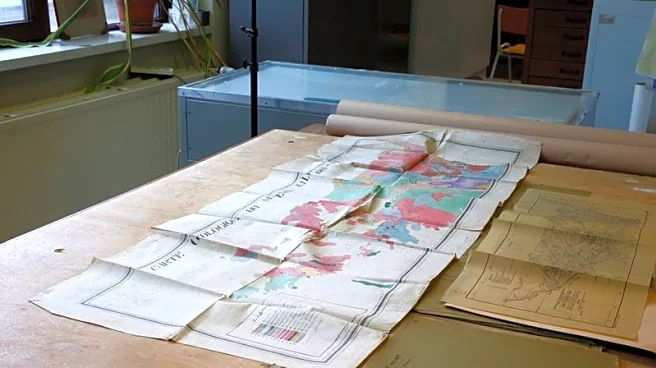
A dispute has arisen between Belgium's AfricaMuseum and U.S. mining company KoBold Metals over the digitization of colonial-era maps of the Democratic Republic of Congo. These maps, part of a vast archive documenting the region's mineral wealth, are at the center
of a disagreement about access and control. KoBold Metals, backed by billionaires Jeff Bezos and Bill Gates, has offered to support the digitization of the archive, a move opposed by the museum, which has its own EU-backed project. The museum argues that the information should remain in the public domain and not be controlled by private entities.
Why It's Important?
The conflict underscores the growing global competition for critical minerals, which are essential for technologies such as batteries and electronics. As countries like the U.S. seek to reduce reliance on China for these materials, access to accurate geological data becomes increasingly valuable. The dispute also highlights the ethical considerations of managing historical data and the legacy of colonial exploitation. The outcome could influence future collaborations between public institutions and private companies in resource-rich regions, impacting international relations and economic strategies.
Beyond the Headlines
This situation raises questions about the ownership and control of historical data, particularly in post-colonial contexts. The ethical implications of allowing private companies access to such data are significant, as it could set precedents for future resource exploration and exploitation. Additionally, the case highlights the ongoing impact of colonial histories on present-day economic and political dynamics. The resolution of this dispute may influence how other countries handle similar issues, potentially affecting global policies on data sharing and resource management.