

What's Happening?
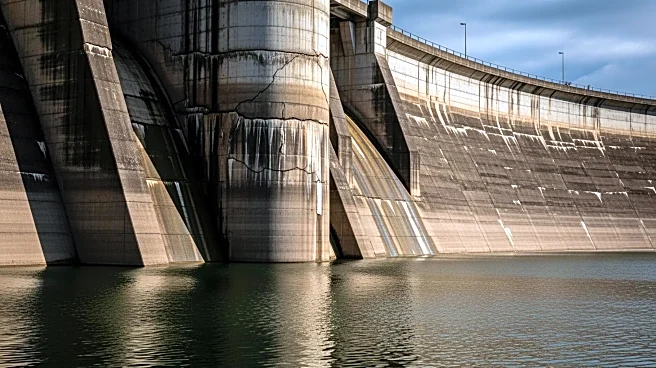
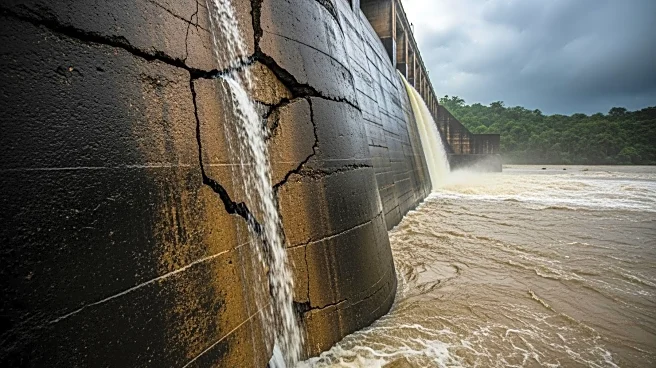
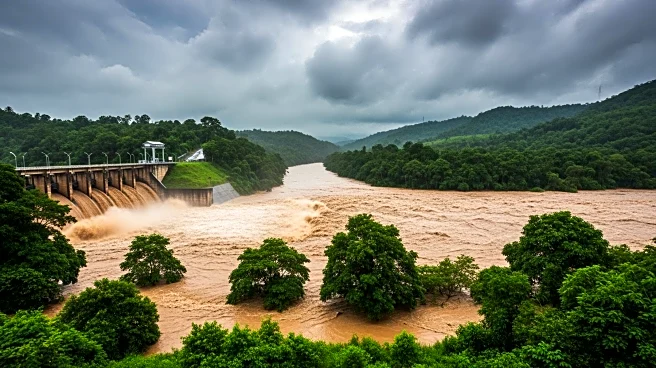
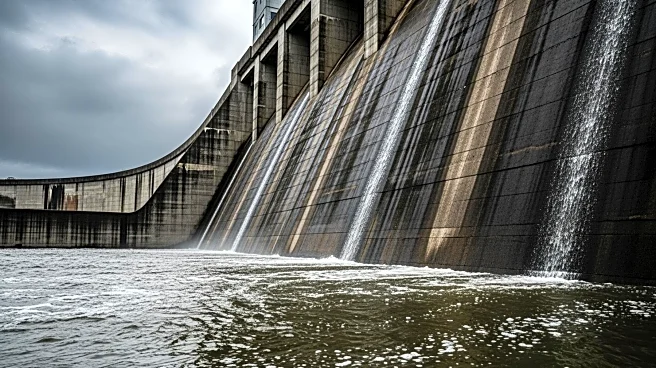
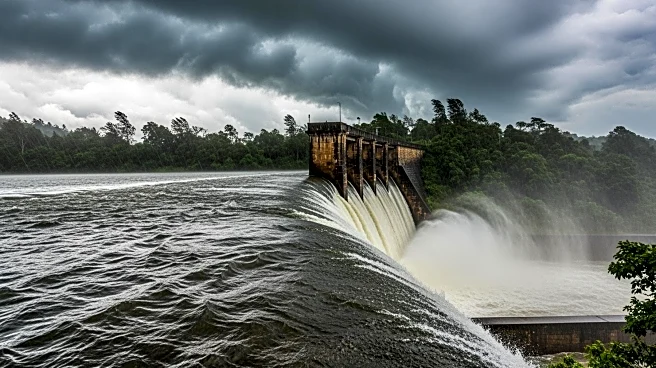
Hawaii officials are closely monitoring the Wahiawā Dam in Central Oʻahu due to concerns over its potential failure following heavy rainfall. The dam, which is over 120 years old, has been identified as having a 'high hazard potential,' meaning its failure could
result in significant loss of life. Recent storms have caused water levels to rise dangerously close to the dam's capacity, prompting evacuation orders for 5,500 residents. The dam's water level peaked at over 85 feet, just shy of its maximum capacity, before receding slightly. The dam was originally constructed in 1906 to support sugar production and has a history of structural issues, including a collapse in 1921. The state has issued multiple deficiency notices to the Dole Food Company, which owns the dam, and fined them for not addressing safety concerns in a timely manner.
Why It's Important?
The potential failure of the Wahiawā Dam poses a significant risk to public safety and infrastructure in the region. The dam's precarious condition highlights the broader issue of aging infrastructure in the United States, particularly in areas prone to natural disasters. The situation underscores the need for timely maintenance and upgrades to prevent catastrophic failures. The state of Hawaii has already allocated funds to acquire and repair the dam, but the transfer of ownership and necessary repairs have yet to be completed. This incident serves as a reminder of the critical importance of infrastructure investment and proactive risk management to protect communities from natural and man-made hazards.
What's Next?
A state board is scheduled to vote on the acquisition of the Wahiawā Dam next week, which could expedite the necessary repairs and upgrades to ensure its safety. The state has already set aside $26 million for the purchase and repair of the dam's spillway. If the acquisition is approved, it will allow the state to implement safety measures and bring the dam up to current standards. In the meantime, officials will continue to monitor the dam closely, especially with the potential for more rain. The outcome of the board's decision will be crucial in determining the future safety and management of the dam.