
What's Happening?
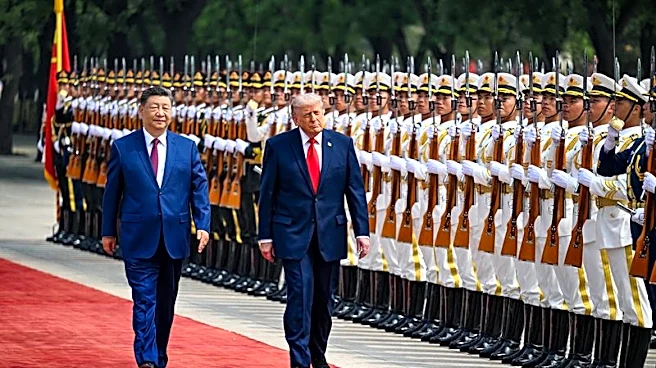
In a recent summit, President Donald Trump and Chinese President Xi Jinping engaged in discussions that highlighted the geopolitical theory known as the 'Thucydides Trap.' This theory suggests that conflict
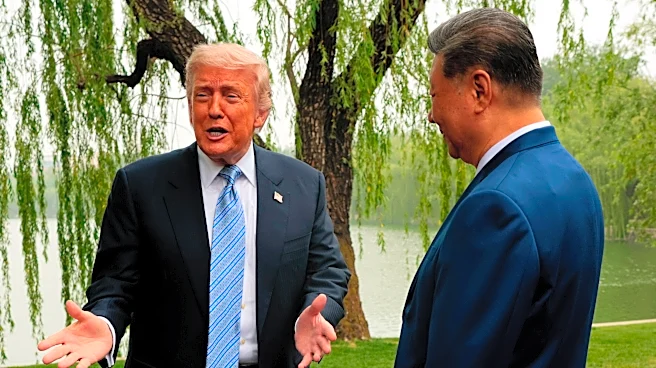
is likely when a rising power threatens to displace an established one. During the meeting, President Trump claimed that Xi described the U.S. as a 'declining nation,' a statement that was not directly quoted by Xi but inferred from the context of their discussions. The summit, which took place amid ongoing tensions over Taiwan and trade policies, underscored the strategic differences between the two nations. Xi emphasized the importance of stable China-U.S. relations and the need to avoid the 'Thucydides Trap,' while Trump contrasted his leadership with that of former President Joe Biden.
Why It's Important?
The discussions between Trump and Xi are significant as they reflect the ongoing power dynamics between the U.S. and China, two of the world's largest economies. The concept of the 'Thucydides Trap' serves as a warning of potential conflict if the U.S. does not adapt to China's rising influence. This meeting could impact future diplomatic and economic strategies, as both nations navigate their roles on the global stage. The emphasis on stable relations and strategic cooperation could influence international policies and economic partnerships, affecting global markets and geopolitical alliances.
What's Next?
Future interactions between the U.S. and China will likely focus on managing competition and avoiding conflict. Both nations may seek to establish frameworks for cooperation in areas such as technology and trade. The outcome of this summit could lead to further diplomatic engagements aimed at addressing mutual concerns and fostering stability. Observers will be watching for any shifts in U.S. policy towards China, particularly in response to Xi's comments and the broader implications of the 'Thucydides Trap.'