






What's Happening?
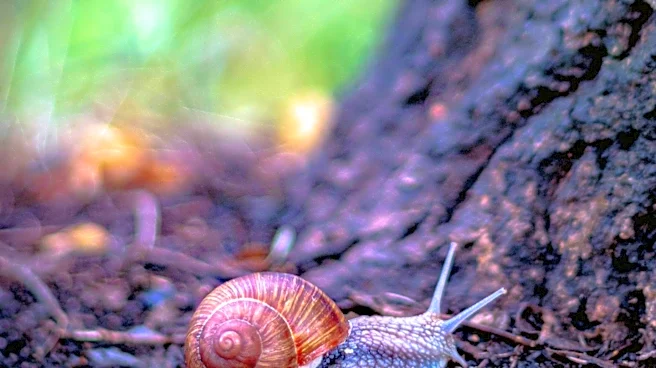
New Zealand mudsnails, an invasive species capable of self-cloning, have been confirmed in Carter Lake in Northern Colorado. This discovery has prompted Colorado Parks and Wildlife (CPW) to intensify efforts to prevent the snails from spreading to other
waterways within the state. These small, brown snails are known for their voracious appetite, consuming large quantities of nutrients and outcompeting native species for food, without providing any ecological benefits in return. Kara Van Hoose, a spokesperson for CPW, emphasized that the snails do not pose a risk to human health but can severely disrupt aquatic ecosystems. The New Zealand mudsnails have previously been identified in 41 other bodies of water across Colorado. In response to the Carter Lake discovery, boat inspection checkpoints are now actively searching for these snails, in addition to other invasive species like zebra mussels, both upon entry and exit from the lake.
Why It's Important?
The presence of New Zealand mudsnails in Carter Lake poses a significant threat to Colorado's aquatic ecosystems and biodiversity. Their ability to reproduce by cloning themselves makes them incredibly difficult to eradicate once established, leading to rapid population growth. This unchecked proliferation can drastically alter the food web by depleting essential nutrients and outcompeting native species, potentially leading to a decline in local fish populations and other aquatic life. The economic impact could also be substantial, affecting recreational fishing, tourism, and the costs associated with managing and mitigating invasive species. The need for stringent boat inspections highlights the ongoing challenge of preventing the spread of invasive species, which often travel inadvertently on recreational equipment. This situation underscores the delicate balance of natural ecosystems and the far-reaching consequences of introducing non-native species.
What's Next?
Colorado Parks and Wildlife's immediate focus is on preventing the further spread of New Zealand mudsnails from Carter Lake to other waterways in Larimer County and beyond. This will involve continued and potentially enhanced boat inspection protocols, public awareness campaigns, and educational efforts for boaters and recreational users. Given the snails' self-cloning capability, their complete eradication from Carter Lake is considered unlikely. Therefore, long-term management strategies will likely concentrate on containment and minimizing their ecological impact. Researchers may also explore various control methods, though effective solutions for established populations of New Zealand mudsnails are challenging. The situation will require ongoing monitoring and adaptive management to protect Colorado's diverse aquatic environments from this persistent invasive threat.
Beyond the Headlines
The discovery of self-cloning New Zealand mudsnails in Carter Lake highlights a broader ecological challenge facing the United States: the increasing threat of invasive species. This phenomenon is not merely an environmental issue but also has significant economic and social dimensions, impacting local economies reliant on healthy ecosystems, such as fishing and tourism. The snails' ability to clone themselves raises fascinating biological questions about adaptation and survival, while simultaneously presenting a formidable obstacle to conservation efforts. This situation underscores the interconnectedness of ecosystems and the global nature of environmental problems, as species can be inadvertently transported across continents. It also prompts a deeper reflection on human responsibility in preserving biodiversity and the ethical implications of human activities on natural environments. The ongoing battle against invasive species like the New Zealand mudsnail is a testament to the complex and often uphill struggle of ecological restoration and protection.