





What's Happening?
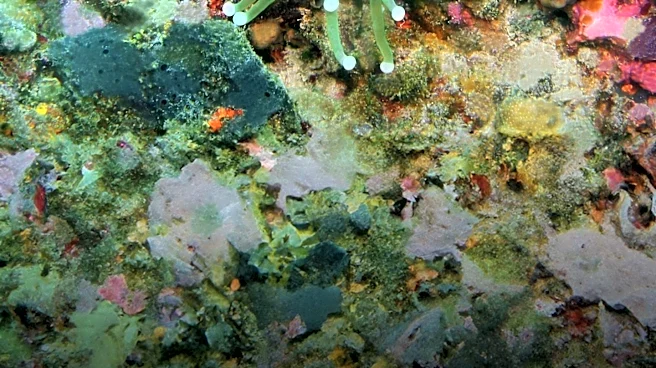
The World Register of Marine Species (WoRMS) provides extensive taxonomic and research details for Anemonia sulcata, a species of sea anemone. The entry compiles numerous scientific sources, highlighting various aspects of its biology, including its toxins
and their significance for central nervous system and biophysical studies. Research cited covers the modulation of Kv3 subfamily potassium currents by sea anemone toxin BDS, as well as the isolation and cDNA cloning of potassium channel peptide toxins from related species like Anemonia erythraea and Antheopsis maculata. The information also touches upon the feeding ecology of intertidal sea anemones, their larval evolution, and the structural characterization of chromoproteins from species such as Cnidopus japonicus. This comprehensive listing serves as a central repository for scientific literature on Anemonia sulcata and other Actiniaria.
Why It's Important?
The detailed scientific information compiled by WoRMS on Anemonia sulcata and other sea anemones is crucial for advancing marine biology and biomedical research. The study of sea anemone toxins, for instance, has direct implications for understanding neurological processes and developing potential therapeutic agents. These toxins, which modulate potassium and sodium channels, offer insights into excitable membranes and could lead to new drugs for conditions affecting the central nervous system. Furthermore, research into the feeding ecology and reproductive strategies of these organisms contributes to a broader understanding of marine ecosystems and biodiversity. This foundational knowledge is vital for conservation efforts and for exploring the biotechnological potential of marine life, impacting fields from pharmacology to environmental science.
What's Next?
Continued research into the toxins and biological mechanisms of Anemonia sulcata and other sea anemones is expected to yield further discoveries in neurobiology and pharmacology. Scientists may focus on isolating new peptide toxins and characterizing their specific interactions with ion channels, potentially leading to the development of novel drugs for neurological disorders or pain management. Further ecological studies could also provide deeper insights into the impact of environmental changes on sea anemone populations and their symbiotic relationships within marine habitats. The ongoing aggregation of scientific data by platforms like WoRMS will continue to support these research endeavors, facilitating collaboration and knowledge sharing among the global scientific community.
Beyond the Headlines
The study of sea anemones extends beyond immediate biomedical applications, touching upon fundamental questions in evolutionary biology and the origins of complex biological systems. The diversity of toxins and their highly specific targets in ion channels highlight the intricate evolutionary arms race between predators and prey in marine environments. Understanding these molecular adaptations can shed light on the evolution of nervous systems and cellular communication. Moreover, the ecological roles of sea anemones, including their symbiotic relationships with other marine organisms, underscore the interconnectedness of marine life and the delicate balance of ocean ecosystems. This research contributes to a holistic view of life on Earth, emphasizing the importance of preserving marine biodiversity for both scientific discovery and ecological stability.