


What's Happening?
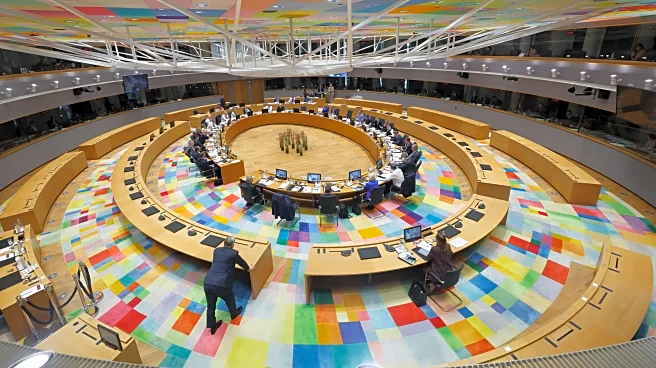
The European Union has decided to limit the flow of confidential information to Hungary due to concerns that the Hungarian government may be leaking sensitive details to Russia. This decision comes amid allegations that Hungarian Foreign Minister Péter
Szijjártó has been sharing information from closed-door EU meetings with Russian officials. As a result, the EU is conducting more diplomatic discussions in smaller groups, excluding Hungary from certain sensitive talks. This move reflects long-standing suspicions about Hungary's close ties with Russia, particularly under the leadership of Prime Minister Viktor Orbán. The situation has led to a restructuring of diplomatic engagements within the EU, with new formats like E3, E4, and others being used to facilitate discussions among like-minded member states.
Why It's Important?
The exclusion of Hungary from sensitive EU talks underscores the growing tensions within the European Union regarding member states' allegiances and the integrity of shared information. Hungary's alleged information sharing with Russia poses a significant threat to European security and unity, especially in the context of the ongoing conflict in Ukraine. This development could lead to further isolation of Hungary within the EU and strain its relationships with other member states. The situation also highlights the challenges the EU faces in maintaining a cohesive foreign policy stance, particularly when individual member states have divergent interests or external alliances. The decision to exclude Hungary could set a precedent for how the EU handles similar situations in the future, potentially impacting the bloc's diplomatic dynamics.
What's Next?
As the EU continues to navigate this complex situation, further diplomatic measures may be taken to ensure the security of sensitive information. Hungary's exclusion from certain talks could lead to increased scrutiny of its actions and policies by other EU members. Additionally, the upcoming elections in Hungary may influence the country's foreign policy direction and its relationship with the EU. The EU may also explore additional mechanisms to safeguard its diplomatic processes and prevent information leaks. The response from Hungary and its allies, as well as the broader international community, will be crucial in determining the future of Hungary's role within the EU.