



What's Happening?
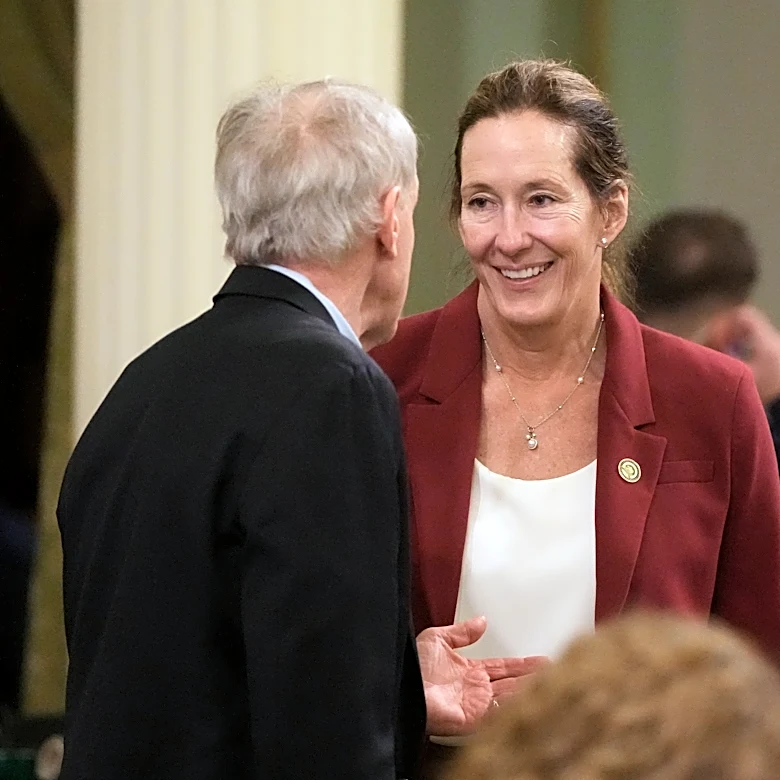
North Carolina Republican congressional hopeful Laurie Buckhout has been fined $2,500 and issued a three-year suspension from the prediction market platform Kalshi. The penalty was imposed after Buckhout placed a wager related to her own campaign. Buckhout,
a former Pentagon official who worked on cyber policy during the Trump administration, admitted to betting on herself, calling it a 'dumb mistake.' She stated that she cooperated with Kalshi's inquiry and agreed to resolve the matter by accepting their conclusions, paying the fine, and agreeing to the trading restriction. It remains unclear whether her bets were on her primary victory or the general election, or the specific amount wagered. Buckhout is currently challenging incumbent Rep. Don Davis (D-NC) in the 1st Congressional District, a race that has been redrawn to favor the GOP and is rated 'lean Republican' by The Cook Political Report.
Why It's Important?
This incident involving Laurie Buckhout highlights the ethical and regulatory challenges emerging with the rise of prediction markets and their intersection with U.S. politics. While Buckhout claims it was an honest mistake, the act of a political candidate betting on their own campaign raises questions about potential conflicts of interest and the integrity of both political processes and financial markets. This event contributes to a growing pattern of political insiders facing scrutiny for their activities on prediction platforms, as evidenced by the recent permanent ban of former Rep. George Santos for alleged insider trading. The case underscores the need for clear guidelines and regulations for political figures participating in such markets, as it can erode public trust in the fairness of elections and the transparency of financial dealings. The ruling by the Ninth Circuit Court of Appeals, allowing Nevada to regulate Kalshi, further emphasizes the increasing legal and regulatory attention on this industry.
What's Next?
The fine and ban for Laurie Buckhout by Kalshi are immediate consequences, but the broader implications for her campaign and the prediction market industry are still unfolding. This incident could become a talking point in her congressional race, potentially affecting voter perception and her standing against incumbent Rep. Don Davis. For Kalshi and other prediction markets, this event, alongside the George Santos ban, will likely intensify calls for more robust regulatory frameworks. The ongoing legal battles, such as the one concerning the Ninth Circuit Court of Appeals ruling on state regulation, suggest that the industry faces a period of increased scrutiny and potential legislative changes. Political candidates and public figures may also face stricter guidelines or outright prohibitions on participating in prediction markets to prevent future ethical dilemmas and maintain public confidence in the electoral process.
Beyond the Headlines
The case of Laurie Buckhout betting on her own campaign on Kalshi delves into the complex ethical landscape of modern politics and finance. It raises fundamental questions about the nature of 'insider information' when the individual is the subject of the prediction. While Buckhout characterized it as a 'dumb mistake,' it highlights a potential gray area where personal knowledge and public betting intersect, challenging traditional notions of fair play and transparency. This incident, alongside others involving political figures, could contribute to a broader societal debate about the appropriate boundaries for public officials' financial activities, especially in emerging digital markets. It also underscores the evolving challenge for regulatory bodies to keep pace with technological advancements that create new avenues for financial speculation, potentially leading to a re-evaluation of existing laws and the development of new ethical standards for political conduct in the digital age.