






What's Happening?
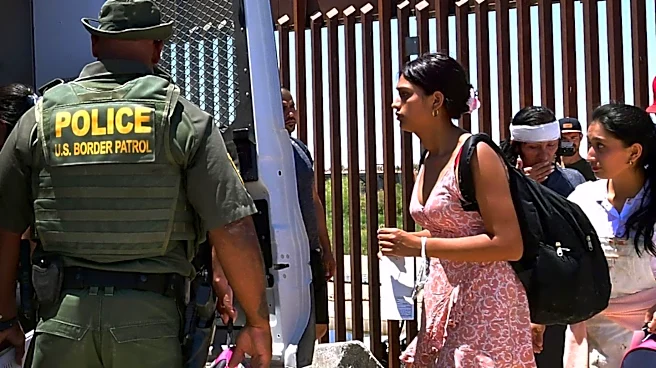
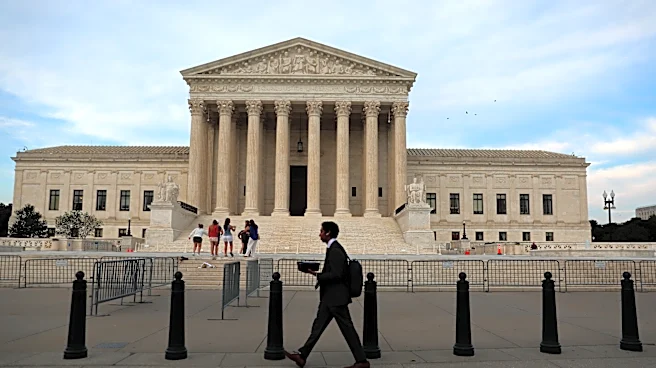
President Trump has nominated Richard 'Lance' Schroyer, a former Oklahoma state trooper, to lead the U.S. Immigration and Customs Enforcement (ICE). This nomination follows a U.S. Supreme Court decision that allows the Trump administration to revoke legal
status from 350,000 Haitians and 6,000 Syrians, potentially leading to their deportation. Schroyer, who has extensive experience in law enforcement, is expected to be the first Senate-confirmed ICE director in 11 years if confirmed. He has previously worked with the 287(g) program, which partners local law enforcement with federal immigration authorities. Schroyer’s nomination comes at a time when ICE is receiving significant funding, with Congress allocating $70 billion through fiscal 2029, excluding additional funds from the president’s tax cuts and spending bill in 2025.
Why It's Important?
The nomination of Richard Schroyer as ICE director is significant as it aligns with President Trump's immigration enforcement agenda, which emphasizes deportation and detention of undocumented immigrants. Schroyer's background in law enforcement and his involvement with the 287(g) program suggest a continuation and potential intensification of these policies. The Supreme Court's recent decision to allow the revocation of legal status for certain immigrant groups underscores the administration's broader strategy to tighten immigration controls. This move could impact thousands of individuals and families, particularly those from Haiti and Syria, who may face deportation. The substantial funding allocated to ICE indicates a long-term commitment to these enforcement measures, affecting communities across the U.S.
What's Next?
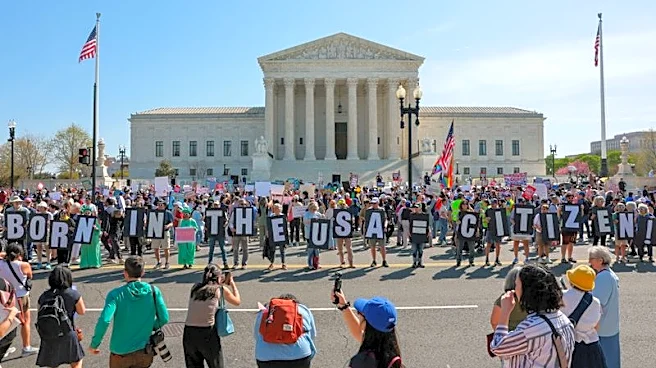
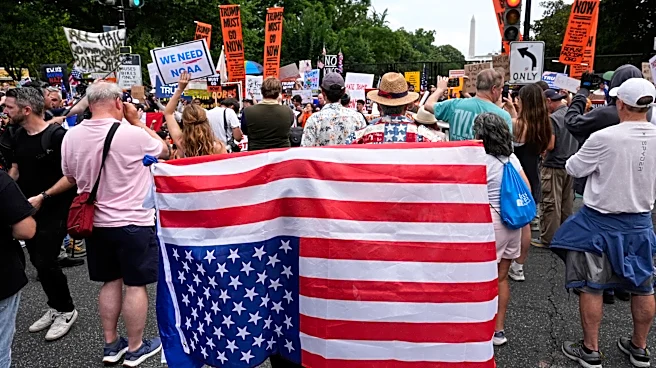
If confirmed by the Senate, Schroyer will lead ICE during a period of heightened immigration enforcement. His leadership could result in increased deportations and detentions, particularly targeting individuals with revoked legal status. The agency's expanded budget will likely support these operations, potentially leading to more collaborations between federal and local law enforcement under programs like 287(g). Stakeholders, including immigrant advocacy groups, may respond with increased legal challenges and public protests, as seen in recent clashes in Newark. The Senate confirmation process will be a critical next step, determining whether Schroyer will officially assume the role and influence the future direction of U.S. immigration policy.