





What's Happening?
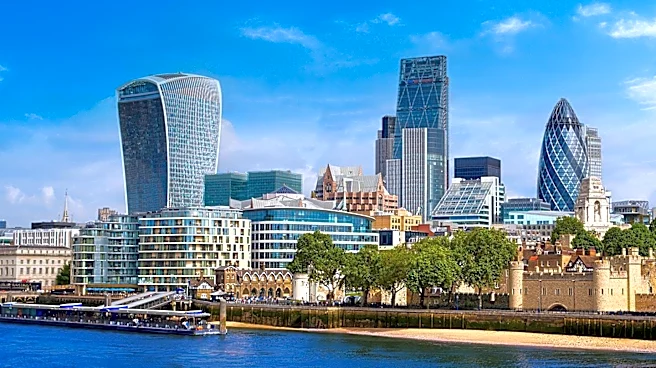
London is confronting significant overheating risks, with over a million homes, 300 care homes, and 1,300 schools identified as vulnerable. This issue was brought to the forefront by unprecedented heatwaves in July 2022, which highlighted the urgent need
for enhanced climate resilience measures. Mete Çoban, the Deputy Mayor of London for Environment and Energy, emphasized that no region globally is adequately prepared for the intensity of recent heatwaves. The 'Heat Ready London' plan, launched in June, aims to address these challenges by providing a framework of short, medium, and long-term actions for local authorities. The plan followed the London Climate Resilience Review and Operation Helios, which stress-tested the capital's emergency response to extreme heat. The findings indicate that without intervention, the cumulative cost to London could reach £36 billion annually by the 2050s.
Why It's Important?
The escalating overheating risk in London carries profound implications for public health, social equity, and economic stability. The vulnerability of over a million homes, particularly social housing, underscores a critical social justice issue, as lower-income populations often reside in less resilient structures. The threat to care homes and schools highlights a direct danger to vulnerable populations, including the elderly and children, who are more susceptible to heat-related illnesses. Economically, the projected annual cost of £36 billion by the 2050s represents a substantial burden on the city's finances, potentially diverting resources from other essential services. Furthermore, the strain on transport infrastructure and productivity during heatwaves can disrupt daily life and economic activity, impacting businesses and workers. The situation in London serves as a stark warning for other major global cities facing similar climate challenges, emphasizing the need for proactive urban planning and infrastructure adaptation to mitigate future risks.
What's Next?
The 'Heat Ready London' plan outlines 37 actions across six themes, including the built environment, nature, and biodiversity. Local authorities are encouraged to adapt these actions by engaging with stakeholders such as NHS partners, housing associations, and businesses. City Hall is working to convene expertise across London to support smaller boroughs that may lack the necessary resources or staff, such as tree officers, to plan for extreme heat. The Mayor has also supported the Climate Change Committee's call for national minimum and maximum workplace temperature standards, acknowledging the growing concern for frontline workers during heatwaves. Investment in retrofitting existing buildings is a priority, aiming to improve energy efficiency, address issues like damp and mold, and enhance heat resilience. Shorter-term measures include expanding water fountains and tree canopies, and utilizing London's cool space map to provide immediate relief during extreme heat events. With El Niño conditions expected to intensify heat pressures, the focus remains on implementing these measures and fostering collaboration across all levels of government and the private sector.
Beyond the Headlines
The overheating crisis in London reveals deeper systemic issues related to urban development, infrastructure resilience, and social inequality. The emphasis on passive design measures, shading, green infrastructure, and ventilation strategies in new developments points to a paradigm shift in architectural and urban planning, moving away from energy-intensive cooling solutions. The challenge of retrofitting existing buildings, especially social housing, highlights the long-term consequences of past construction practices that did not adequately account for rising temperatures. This situation also brings to light the ethical responsibility of governments and developers to ensure that all citizens, regardless of socioeconomic status, have access to safe and comfortable living environments. The operational strain on council services and frontline workers during heatwaves underscores the need for comprehensive occupational health and safety standards that address climate-related risks. Ultimately, London's experience serves as a microcosm of the global climate adaptation challenge, necessitating a holistic approach that integrates environmental, social, and economic considerations into urban policy and practice.