



What's Happening?
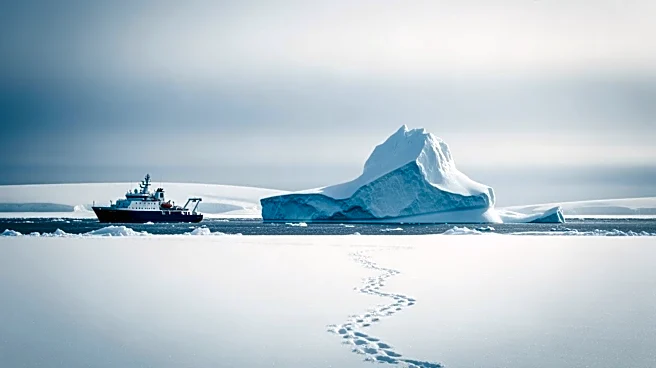
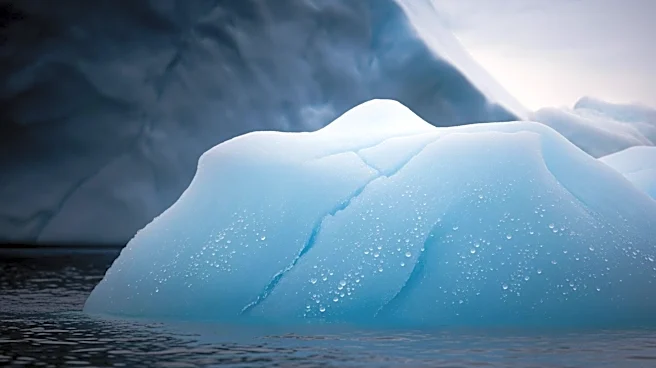
Norwegian researchers have discovered that Antarctic glaciers are melting faster than previously thought due to warm water accumulating in channels at the base of these glaciers. This finding, published in Nature Communications, highlights that the geometry
of ice shelves can trap warm ocean water, accelerating local melting. The study focused on the Fimbulisen Ice Shelf in East Antarctica, revealing that even small amounts of warmer water can significantly increase melting rates. This process could undermine the stability of ice shelves, leading to faster ice flow into the ocean and a more rapid rise in global sea levels.
Why It's Important?
The accelerated melting of Antarctic glaciers poses a significant threat to global sea levels, which could rise faster than current models predict. This has profound implications for coastal communities worldwide, as rising sea levels can lead to increased flooding and erosion. The study underscores the need for more accurate climate models that account for the complex interactions between ice shelf geometry and ocean temperatures. Policymakers must consider these findings in coastal planning and adaptation strategies to mitigate the potential impacts on infrastructure and ecosystems.
What's Next?
Future research will likely focus on refining climate models to incorporate the effects of ice shelf geometry on melting rates. This could lead to more accurate predictions of sea-level rise and inform global policy decisions. Additionally, monitoring changes in Antarctic ice shelves will be crucial to understanding the long-term impacts of climate change on polar regions. International collaboration may be necessary to address the challenges posed by rising sea levels and to develop effective adaptation strategies.