





What's Happening?
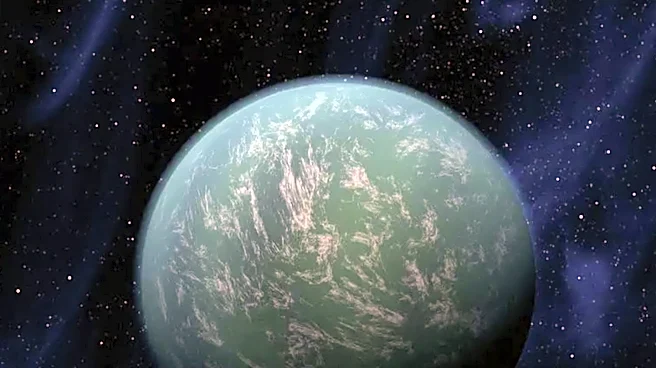
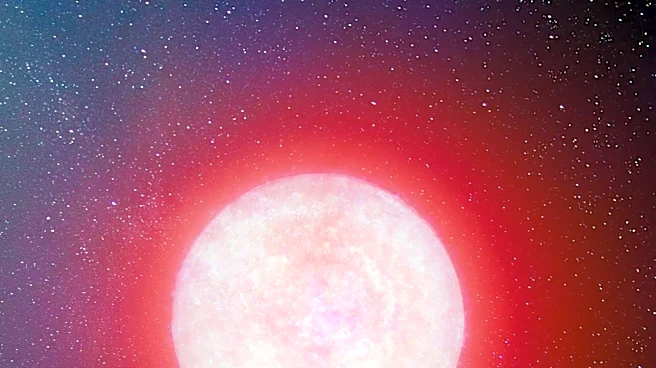
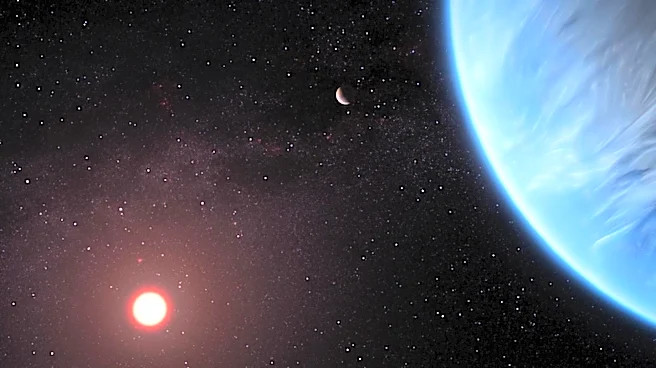
Astronomers have identified a potentially habitable exoplanet named GJ 3378b, located just 25 light-years away from Earth. Initially discovered in 2024, this super-Earth orbits a red dwarf star and has been the subject of extensive follow-up observations.
These studies have refined its mass estimate to 2.3 Earth masses, suggesting a rocky composition. GJ 3378b is situated within its star's habitable zone, where conditions may allow for liquid water on its surface. This discovery positions GJ 3378b as one of the most Earth-like exoplanets known within the 10-parsec solar neighborhood, making it a prime candidate for further investigation into its habitability.
Why It's Important?
The discovery of GJ 3378b is significant as it enhances the search for extraterrestrial life by identifying a nearby exoplanet with Earth-like characteristics. Its proximity to Earth makes it an accessible target for future studies aimed at detecting biosignatures. The potential for liquid water, a key ingredient for life as we know it, increases the likelihood of habitability. This finding contributes to our understanding of planetary systems and the conditions that might support life beyond our solar system, potentially influencing future space exploration missions and the search for life in the universe.
What's Next?
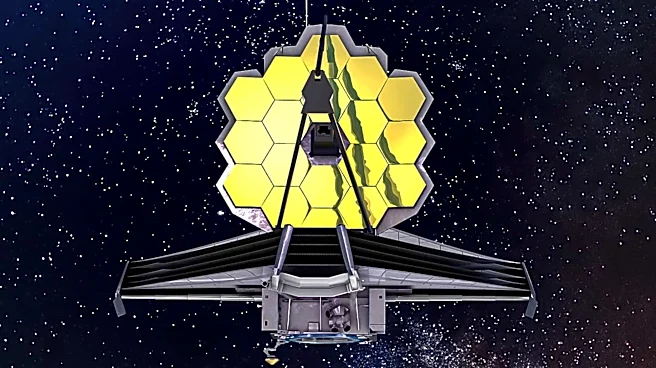
Future research will focus on determining whether GJ 3378b has an atmosphere, which is crucial for sustaining liquid water. Scientists will likely use advanced telescopes and instruments to study the planet's atmospheric composition and search for signs of life. The exoplanet's proximity allows for detailed observations that could provide insights into its potential habitability. As technology advances, GJ 3378b may become a focal point for missions aimed at exploring nearby exoplanets, furthering our quest to answer the question of whether we are alone in the universe.