






What's Happening?
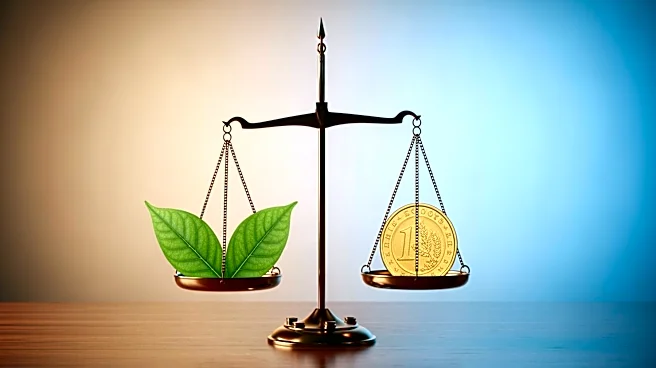
A new report, the Global Justice Report, presents a radical vision for achieving high levels of wellbeing and economic equality while maintaining planetary habitability. The report outlines a plan for global transformation that includes fast decarbonization,
a shift towards sufficiency, and a significant reduction in global inequality. It proposes reducing working hours, changing consumption patterns, and reforming international financial systems. The report emphasizes the need for a global justice fund to finance these changes, suggesting that nearly 90% of the world's population could double their income by 2100 while maintaining a habitable climate.
Why It's Important?
The report's proposals are significant as they offer a comprehensive approach to addressing the intertwined challenges of economic inequality and climate change. By advocating for a reduction in inequality and a shift towards sustainable consumption, the report challenges the status quo of economic growth at the expense of environmental health. The suggested reforms could lead to a more equitable distribution of resources and power, potentially reducing social tensions and fostering global cooperation. The report's emphasis on sufficiency and sustainability aligns with growing calls for systemic change to address the climate crisis.
What's Next?
The report is part of a broader international agenda for reforming global financial and economic systems. It will be discussed at various international forums, including the G20 and UN initiatives, to build support for its implementation. The success of the report's vision depends on political will and the ability to mobilize a coalition for change. The proposed global justice fund and new international institutions aim to redistribute resources and power, challenging existing economic structures and promoting a more equitable and sustainable future.
Beyond the Headlines
The report highlights the need for a cultural shift towards sufficiency and sustainability, challenging the current economic model that prioritizes growth and consumption. It suggests that achieving a habitable and equal world requires a reevaluation of societal values and priorities. The proposed changes align with historical precedents of social progress, such as the expansion of universal suffrage and healthcare, indicating that significant change is possible with collective effort. The report's vision offers a hopeful alternative to the bleak projections of continued inequality and environmental degradation.