





What's Happening?
The Illinois Holocaust Museum and Education Center in Skokie is employing advanced holographic technology to allow visitors to interact with Holocaust survivors, even after their passing. One such exhibit features Aaron Elster, a survivor who spent two
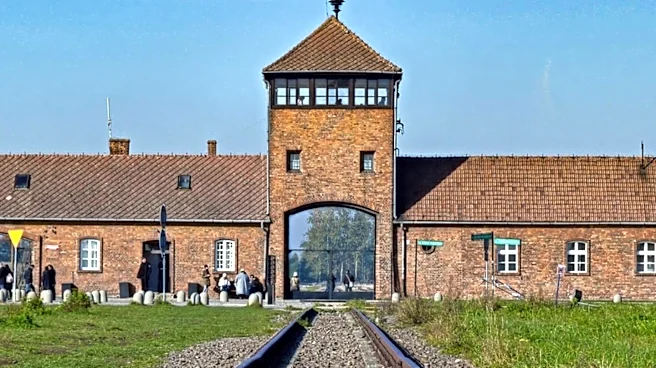
years hidden from Nazis as a child. Through high-definition holographic interview recordings and voice-recognition technology, visitors can ask Elster questions directly, and he responds in real-time. Elster is one of 11 Holocaust survivors filmed for this program, with interviews recorded over five days in a Los Angeles studio. The museum's 'Abe & Ida Cooper Survivor Stories Experience' aims to connect visitors with individuals who lived through historical events. This initiative also includes interactive holograms of other survivors, such as Fritzie Fritzshall, who survived Auschwitz. The technology extends beyond the museum walls through a platform called 'Voices of Survival,' which uses prerecorded video and natural-language processing to generate real-time responses to audience questions, making these testimonies accessible to a wider audience.
Why It's Important?
This innovative use of holographic technology is crucial for preserving the personal narratives of Holocaust survivors, ensuring that future generations can learn directly from their experiences. As the number of living survivors diminishes, these interactive exhibits provide a powerful and immersive educational tool that transcends traditional historical accounts. The ability to ask questions and receive direct responses from a holographic representation creates a unique and impactful learning experience, fostering empathy and a deeper understanding of the Holocaust's human cost. This approach helps combat historical revisionism and denial by making survivor testimonies more accessible and engaging. Furthermore, the expansion of this technology through platforms like 'Voices of Survival' broadens its reach, allowing individuals globally to engage with these vital stories, thereby reinforcing the importance of remembrance and education in preventing future atrocities.
What's Next?
The Illinois Holocaust Museum plans to continue expanding its use of technology to preserve and share survivor stories. This includes a project called '3 G's,' which trains children and grandchildren of survivors to carry on their relatives' narratives. This initiative is particularly relevant given the reported increase in antisemitic incidents across Illinois, highlighting the ongoing need for education and awareness. The museum also offers a virtual-reality experience that transports visitors to concentration camps, guided by survivors. These efforts indicate a clear direction towards leveraging technology to ensure the longevity and impact of Holocaust education. The continued development and implementation of such interactive platforms will likely lead to more widespread access to these testimonies, potentially influencing educational curricula and public discourse on human rights and historical memory.
Beyond the Headlines
The deployment of holographic and AI-driven interactive testimonies raises profound ethical and philosophical questions about the nature of memory, presence, and historical representation. While these technologies offer an unprecedented way to preserve and interact with the past, they also prompt considerations about the authenticity of such interactions and the potential for misinterpretation or manipulation. The 'presence' of a holographic survivor, while powerful, is a technological construct, and understanding this distinction is vital. This development could set a precedent for how other historical events and personal narratives are preserved and taught, potentially transforming the landscape of museums and educational institutions. It underscores a broader societal shift towards digital preservation and interactive learning, challenging traditional methods of historical engagement and emphasizing the enduring power of individual stories in shaping collective memory.