
What's Happening?
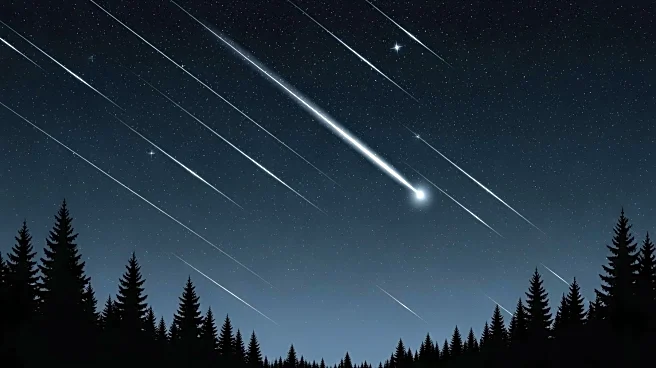
The Ursid meteor shower is reaching its peak, providing a celestial display visible under dark skies across much of the Northern Hemisphere. The shower, which is active for about a week, is expected to
produce approximately 10 meteors per hour at its peak. The radiant of the Ursids is located near the Little Dipper, making it visible all night for observers in the Northern Hemisphere. This event coincides with the winter solstice, adding to the astronomical significance of the period. Additionally, Comet 24P/Schaumasse is anticipated to be visible in the early morning sky around December 23rd, as it moves through a region rich with galaxies in the Virgo Cluster.
Why It's Important?
The Ursid meteor shower, while not as prolific as the Geminids, offers a unique opportunity for stargazers and astronomy enthusiasts to witness a natural spectacle. Such events foster public interest in astronomy and can inspire educational activities related to space science. The visibility of Comet 24P/Schaumasse adds another layer of interest, as it provides a chance to observe a comet in proximity to notable galaxies. These celestial events can also serve as a reminder of the broader universe and our place within it, potentially sparking discussions about space exploration and scientific discovery.
What's Next?
Following the peak of the Ursid meteor shower, observers can continue to watch for meteors in the days leading up to and following the event, as the shower remains active. Comet 24P/Schaumasse will continue its journey through the Virgo Cluster, offering further opportunities for observation. Astronomy enthusiasts and professionals alike may use this time to capture images and data, contributing to ongoing research and public engagement in astronomy. The winter solstice marks a turning point in the astronomical calendar, with longer days ahead, potentially affecting future skywatching conditions.