




What's Happening?
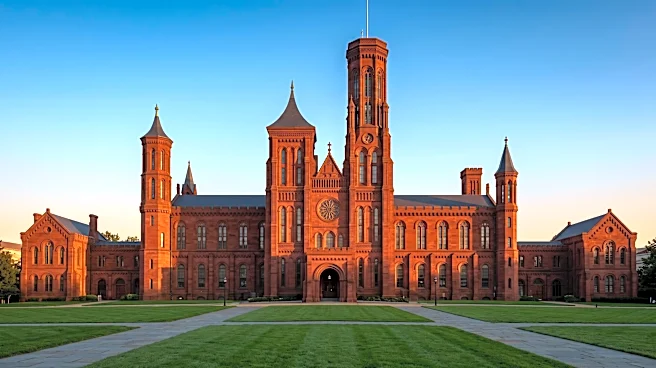
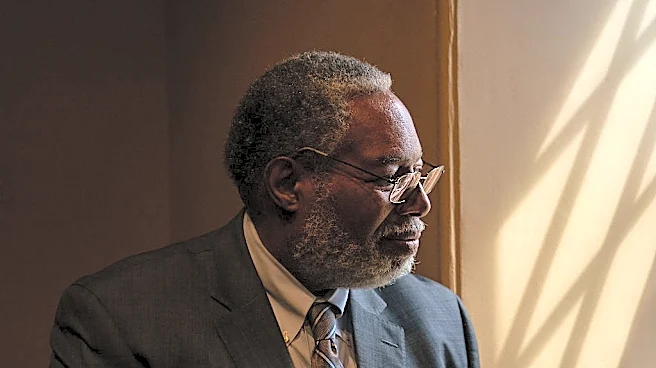
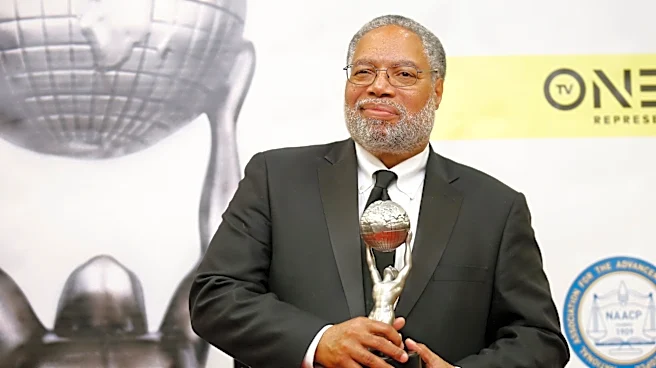
Lonnie Bunch, Secretary of the Smithsonian Institution, has announced his resignation after seven years in the role, amidst mounting attacks from the Trump administration. The administration has accused the Smithsonian's leadership of adopting an 'ideological
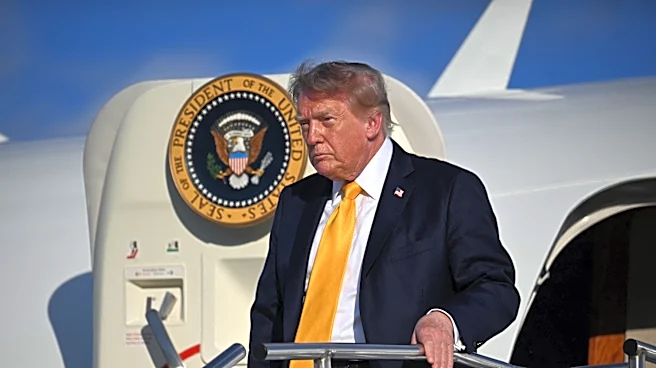
framework' that presents a 'radical view' of American history, rather than celebrating it as a shared national inheritance. These accusations intensified following a White House report in July that criticized the Smithsonian Institution for engaging in 'extreme political activism.' The report was prompted by President Trump's March 2025 executive order, 'Restoring Truth and Sanity to American History,' which directed Vice President J.D. Vance to remove 'improper ideology' from Smithsonian institutions. Bunch, who met with President Trump in August 2025, has consistently affirmed the Smithsonian's independence from political influence and its commitment to telling the complex story of the nation.
Why It's Important?
Lonnie Bunch's resignation signifies a significant moment in the ongoing cultural and political battles over the interpretation of American history. The Trump administration's pressure on the Smithsonian, a revered national institution, highlights a broader effort to shape public narratives and educational content to align with a particular ideological viewpoint. This clash raises fundamental questions about academic freedom, institutional independence, and the role of cultural institutions in a democratic society. The administration's actions could be seen as an attempt to exert political control over historical interpretation, potentially leading to a more sanitized or nationalistic version of history being presented to the public. For the Smithsonian, a non-partisan institution dedicated to scholarship and education, this pressure challenges its core mission and could impact its ability to present diverse perspectives and engage in critical historical analysis. The departure of a prominent leader like Bunch, especially under such circumstances, could also have a chilling effect on other cultural and educational institutions.
What's Next?
The Smithsonian's Board of Regents will now begin a national search for Bunch's successor, with an acting secretary to be announced in the interim. The selection of the next Secretary will be closely watched, as it could signal the future direction of the institution and its approach to historical interpretation. The Trump administration's continued scrutiny and potential threats to withhold federal funds and support suggest that the ideological battle over the Smithsonian's narrative is far from over. Future administrations may either continue or reverse this pressure, depending on their political agendas. The incident also highlights the vulnerability of federally funded cultural institutions to political influence, prompting discussions about how to safeguard their independence and academic integrity. Civil society groups and historians are likely to remain vigilant, advocating for the preservation of diverse and comprehensive historical narratives.
Beyond the Headlines
This event transcends a simple personnel change; it represents a critical juncture in the ongoing 'culture wars' in the United States, particularly concerning education and historical memory. The Trump administration's insistence on a 'celebratory' view of American history, devoid of 'negative light,' reflects a broader conservative movement to counter what it perceives as overly critical or 'woke' interpretations of the past. This approach risks undermining the complexity and nuance inherent in historical inquiry, potentially leading to a less informed citizenry. The ethical implications revolve around the responsibility of public institutions to present a truthful and comprehensive account of history, even when it is uncomfortable or challenging. The long-term impact could be a more polarized understanding of American identity, where historical narratives become battlegrounds for political ideologies rather than spaces for collective learning and reflection. This situation also raises questions about the role of executive power in shaping cultural institutions and the potential for such actions to erode democratic norms.