








What's Happening?
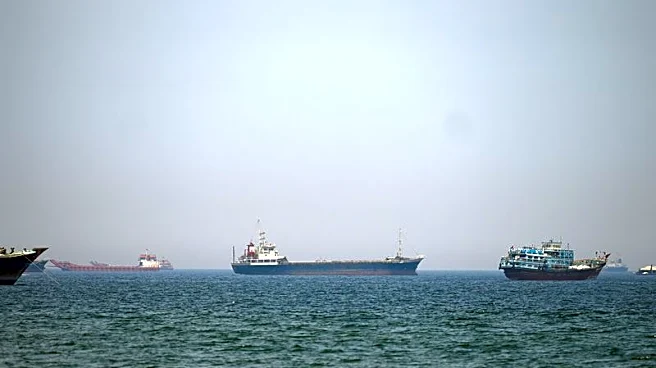
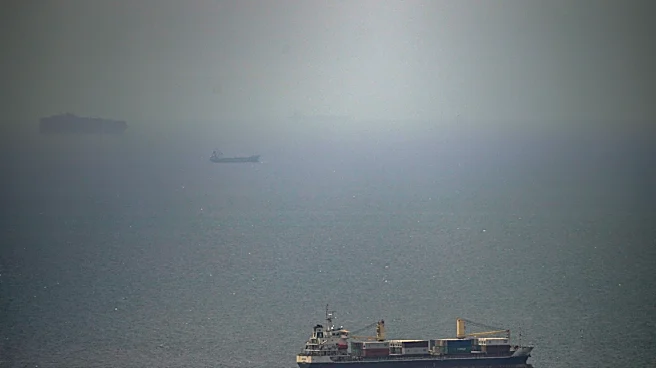
President Trump has announced that the United States will continue its naval blockade on Iran until Tehran agrees to a nuclear deal that meets Washington's demands. This decision comes after rejecting an Iranian proposal to reopen the Strait of Hormuz
and delay nuclear negotiations. Trump emphasized that the blockade is more effective than military action, asserting that it is a crucial leverage point to prevent Iran from developing nuclear weapons. The blockade has significantly impacted Iran's oil exports, with storage facilities reportedly nearing capacity. Meanwhile, Iran has threatened unprecedented action if the blockade persists, indicating a potential escalation in tensions. Diplomatic efforts to restart negotiations have been slow, with Pakistani mediators expecting a revised Iranian proposal soon. The situation remains tense as both sides navigate the complex geopolitical landscape.
Why It's Important?
The continuation of the naval blockade has significant implications for global energy markets and international relations. The blockade has already contributed to rising energy prices, affecting economies worldwide. For the U.S., maintaining pressure on Iran is seen as a strategic move to curb its nuclear ambitions, but it also risks further destabilizing the region. The blockade's impact on oil exports through the Strait of Hormuz, a critical chokepoint for global oil supply, could exacerbate economic challenges, particularly in energy-dependent countries. Domestically, President Trump faces political pressure as rising energy costs and declining poll numbers could influence the upcoming midterm elections. The situation underscores the delicate balance between diplomatic efforts and military strategies in addressing nuclear proliferation concerns.
What's Next?
As the blockade continues, the focus will be on Iran's response and the potential for renewed negotiations. The U.S. Central Command has prepared contingency plans for military strikes if diplomatic efforts fail, though no action has been ordered yet. The international community will be closely monitoring the situation, particularly the impact on global oil prices and regional stability. The outcome of the negotiations could have far-reaching consequences for U.S.-Iran relations and the broader Middle East. Additionally, the political ramifications for President Trump could influence his administration's approach to foreign policy and domestic issues related to energy and economic stability.