





What's Happening?
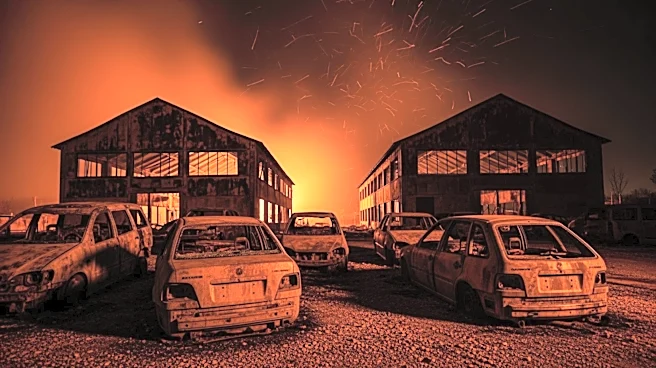
A significant two-alarm fire broke out at a landscaping business in the Ames Lake area of Redmond, Washington, early Wednesday morning. The fire, which was reported around 3 a.m., quickly escalated, engulfing a building and spreading to nearby trees,
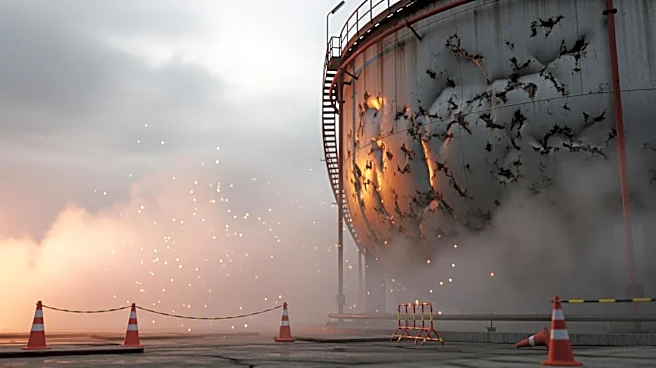
a second building, and 15 cars parked on the premises. Battalion Chief Catherine Breault noted that the response was complicated by a lack of water pressure in the local hydrant, necessitating water to be trucked in. Explosions were reported due to gas tanks and other items at the site. Firefighters from Bellevue, Fall City, Snoqualmie, and Redmond responded to the incident. Fortunately, no injuries have been reported. The fire also led to the closure of State Route 202 at Northeast Tolt Hill Road, as announced by the Washington State Department of Transportation.
Why It's Important?
The fire at the Redmond landscaping business highlights the challenges faced by emergency services in areas with inadequate infrastructure, such as low water pressure in hydrants. This incident underscores the importance of ensuring that emergency response systems are robust and capable of handling large-scale emergencies. The destruction of two buildings and 15 cars represents a significant economic loss for the business involved, potentially affecting its operations and employees. Additionally, the road closure on State Route 202 could impact local traffic and logistics, affecting daily commutes and business operations in the area. The incident serves as a reminder of the need for businesses to have comprehensive emergency preparedness plans in place.
What's Next?
In the aftermath of the fire, investigations are likely to focus on determining the cause of the blaze and assessing the full extent of the damage. The business will need to evaluate its losses and consider rebuilding efforts, which may involve insurance claims and potential financial assistance. Local authorities might also review the infrastructure in the area, particularly the water supply system, to prevent similar issues in the future. Community and business leaders may engage in discussions about improving emergency response capabilities and infrastructure resilience to better protect against future incidents.