







What's Happening?
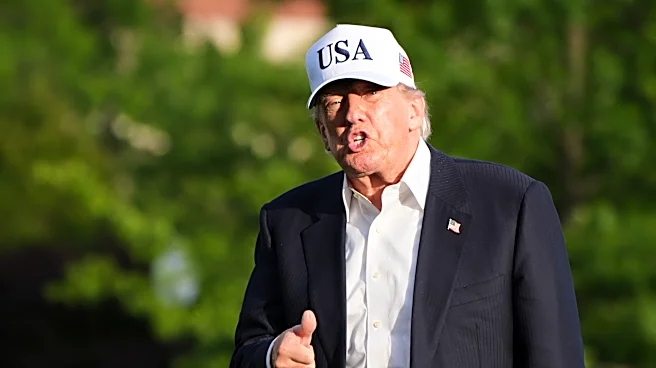
US President Donald Trump announced a delay in planned military strikes on Iran after receiving requests from Gulf state leaders. The strikes were initially scheduled for Tuesday, but Trump cited respect for the leaders of Qatar, Saudi Arabia, and the UAE
as the reason for the postponement. Trump expressed optimism about reaching a nuclear agreement with Iran, emphasizing the importance of preventing Iran from obtaining nuclear weapons. The decision to delay the strikes reflects ongoing diplomatic efforts and the complex geopolitical landscape in the Middle East.
Why It's Important?
The postponement of military action against Iran is a significant development in US foreign policy, highlighting the influence of Gulf states in shaping American military decisions. This move may open the door for renewed diplomatic negotiations aimed at curbing Iran's nuclear ambitions. The potential for a peaceful resolution could stabilize the region and prevent further escalation of tensions. However, the situation remains precarious, as the US has indicated readiness to resume military action if negotiations fail, underscoring the delicate balance between diplomacy and military preparedness.
What's Next?
The focus will now shift to diplomatic negotiations between the US and Iran, with the involvement of Gulf states as key stakeholders. The outcome of these talks will be crucial in determining the future of US-Iran relations and regional stability. The international community will be watching closely for any breakthroughs or setbacks in the negotiations. Additionally, the US military's readiness to resume strikes if necessary will remain a critical factor in the ongoing geopolitical dynamics.