


What's Happening?
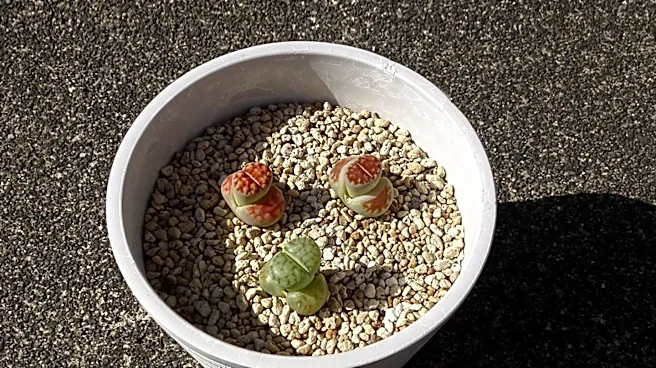
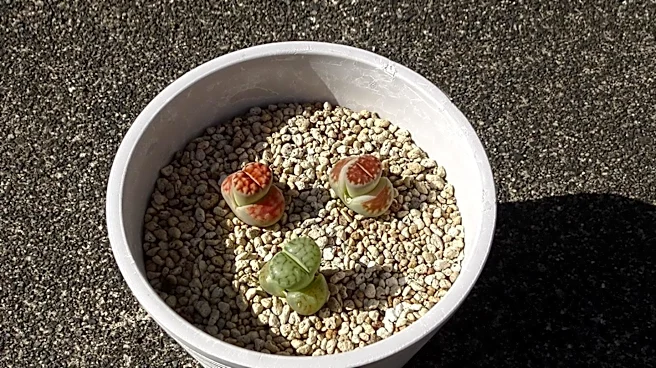
Lithops werneri, a rare succulent native to Namibia, is critically endangered with fewer than 200 plants remaining in the wild. This plant, which camouflages itself as a pebble, has been heavily impacted by illegal collection and climate change. The species,
found only in a small area of the Erongo Mountains, has seen an 80% decline since 1981. Conservationists are concerned about its survival as climate change alters rainfall patterns, further threatening its already limited habitat.
Why It's Important?
The plight of Lithops werneri highlights the broader issue of biodiversity loss driven by human activities and climate change. The plant's decline underscores the need for stronger conservation measures and international cooperation to protect endangered species. It also serves as a reminder of the delicate balance within ecosystems and the potential for irreversible damage if current trends continue. The story of Lithops werneri is a microcosm of the challenges facing many species worldwide.
Beyond the Headlines
The story raises ethical questions about the responsibility of humans to protect vulnerable species and the impact of consumer demand on biodiversity. It also highlights the importance of preserving genetic diversity and the potential loss of unique biological traits if species like Lithops werneri go extinct. The situation calls for increased awareness and action to address the root causes of biodiversity loss.