





What's Happening?
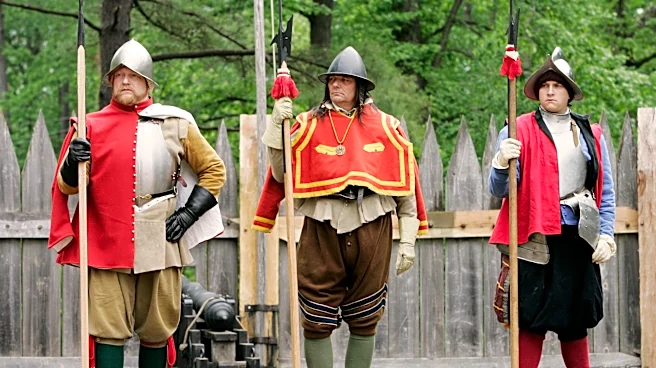
Middle and high school students in Pelham recently engaged in a living history reenactment of the Battle of Pelham on Franklin Field. Dressed in Revolutionary-era attire, students portrayed both General Howe’s Redcoats and Colonel John Glover’s Marblehead
Mariners. The reenactment, led by Sergeant Joe Ryan of the 5th New York Regiment, aimed to provide an immersive educational experience ahead of the battle's 250th anniversary. Colonel John Glover, with approximately 750 men, was tasked with delaying 4,000 British troops. He employed a strategic approach, utilizing stone walls and trees for cover to conceal his forces' limited numbers. This tactic successfully stalled the British, allowing General George Washington and the Continental Army to retreat from Manhattan to White Plains, avoiding encirclement. The students experienced the sights and sounds of the battle, gaining an appreciation for Glover's ingenuity and the challenges faced by the Continental Army.
Why It's Important?
This educational initiative is important for fostering a deeper understanding of American history among younger generations. By participating in a reenactment, students move beyond textbook learning to a tangible experience of a pivotal moment in the American Revolutionary War. The Battle of Pelham, though often overshadowed by larger engagements, was crucial in enabling the Continental Army's survival. Colonel John Glover's strategic brilliance in delaying a superior British force highlights the resourcefulness and determination of early American military leaders. This event underscores the value of experiential learning in history education, potentially inspiring future interest in historical preservation and study. It also serves as a community event, bringing local history to life and commemorating significant national events.
Beyond the Headlines
The reenactment of the Battle of Pelham offers more than just a historical lesson; it provides a unique opportunity for students to develop critical thinking skills by analyzing military strategy and understanding the human element of conflict. By stepping into the roles of historical figures, students can gain empathy for the challenges faced by those who fought for American independence. This type of immersive education can also spark discussions about leadership, sacrifice, and the origins of the United States. Furthermore, the event reinforces the importance of local history in the broader national narrative, demonstrating how smaller engagements contributed significantly to the overall outcome of the Revolutionary War. It also highlights the ongoing efforts to keep historical memory alive through community engagement and educational programs.