
What's Happening?
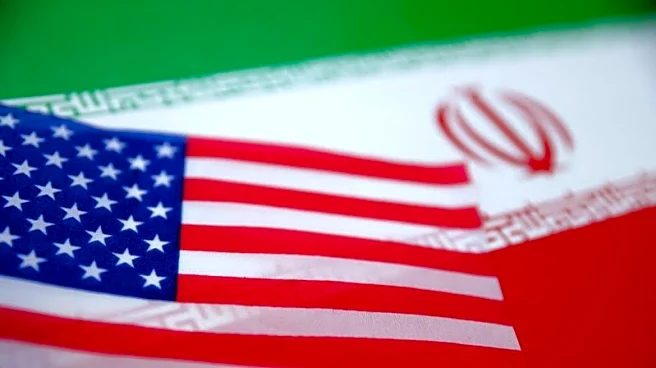
The Trump administration is considering a range of responses to Iran's suppression of nationwide protests, which have resulted in at least 646 deaths according to human rights groups. President Trump has
been briefed on various military and cyber options, including cyber operations and influence campaigns aimed at disrupting Iran's military and media networks. These options could be used independently or alongside conventional military force. The White House has emphasized that diplomacy remains the preferred approach, but military options are not ruled out. The protests in Iran have spread across all 31 provinces, posing a significant challenge to the regime.
Why It's Important?
The situation in Iran is critical as it represents one of the most significant challenges to the Iranian regime since the 1979 revolution. The U.S. response could have far-reaching implications for regional stability and international relations. Military or cyber actions by the U.S. could escalate tensions, potentially affecting global oil markets and regional security. The protests highlight the internal pressures faced by the Iranian government, and the U.S. response will be closely watched by allies and adversaries alike. The potential for renewed negotiations with Iran could also impact U.S. foreign policy and its approach to Middle Eastern geopolitics.
What's Next?
The U.S. administration is expected to continue evaluating its options, with senior national security officials set to review scenarios involving Iran. The possibility of renewed negotiations with Iran remains, as both sides have indicated a willingness to engage in talks. However, the outcome of these discussions and the U.S. response to the ongoing protests will be pivotal in shaping future relations. The international community will be monitoring the situation closely, as any escalation could have significant consequences for global security and economic stability.