







What's Happening?
Fluor Corporation has been selected by X-energy to provide nuclear island design and engineering services for the proposed Cascade Advanced Energy Facility, a next-generation nuclear power development near Richland, Washington. This project will initially
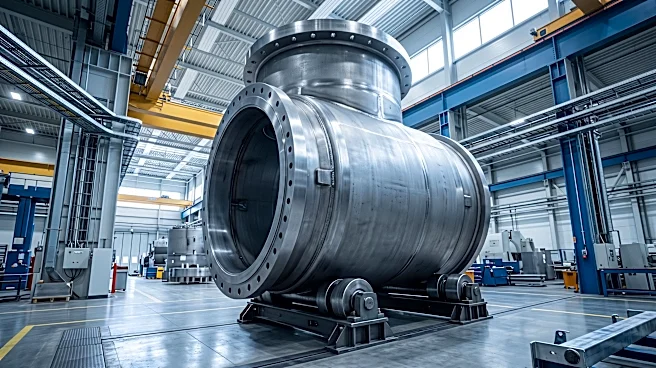
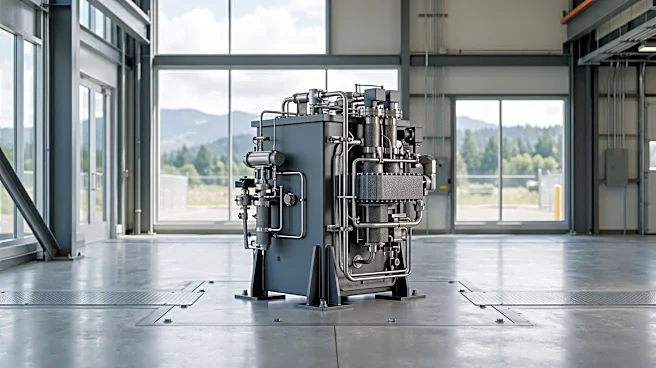
deploy four Xe-100 small modular high-temperature gas-cooled reactors, providing a combined electrical generating capacity of 320 MW. The agreement builds on previous collaboration between Fluor and X-energy for an advanced nuclear facility in Texas, aiming to leverage established design approaches and supply-chain experience. The Cascade project is a partnership between Energy Northwest, X-energy, and Amazon, with Amazon serving as a strategic program partner. The Xe-100 technology utilizes helium as a coolant and graphite as a neutron moderator, with TRISO fuel particles designed for high-temperature operation and enhanced safety. Fluor's scope includes engineering, design development, supply-chain activities, estimating, and project controls for the nuclear island, which houses the reactor systems and associated nuclear-grade equipment.
Why It's Important?
This contract signifies a crucial step in the commercialization and deployment of advanced small modular reactor (SMR) technology in the United States. The Cascade Advanced Energy Facility aims to provide reliable, low-carbon electricity to meet the growing energy demands of the Pacific Northwest, particularly for energy-intensive sectors like data centers, cloud computing, and advanced manufacturing. The involvement of Amazon as a strategic partner highlights the increasing interest from major corporations in securing clean and consistent power sources. The project's emphasis on standardized reactor modules and repeatable engineering is intended to reduce construction complexity and costs, potentially accelerating the adoption of SMRs. Successful execution of this project could demonstrate the technical, regulatory, and commercial viability of X-energy's Xe-100 technology, influencing future investment and development in the U.S. nuclear energy sector and contributing to national decarbonization goals.
What's Next?
The initial phase of the Cascade project involves the deployment of four Xe-100 reactor modules, with the potential for expansion to 12 modules, increasing the total capacity to approximately 960 MWe. This expansion is contingent on future development decisions, licensing, financing, and infrastructure requirements. Fluor's ongoing engineering and design work will be critical in establishing technical requirements for major nuclear components and identifying qualified suppliers. The project will be subject to U.S. Nuclear Regulatory Commission (NRC) licensing and regulatory requirements, which will determine the applicable standards for systems and equipment. The collaboration between X-energy and Amazon aims to support up to 5 GW of new nuclear capacity by 2039, indicating a long-term commitment to advanced nuclear energy. The successful progression of the Cascade facility will serve as a benchmark for future SMR projects in the U.S. and potentially influence global nuclear energy development.
Beyond the Headlines
The Cascade project represents a broader shift in the U.S. energy landscape towards advanced nuclear technologies as a solution for reliable, low-carbon power. The modular nature of SMRs, with their factory-manufacturing approach, could revolutionize nuclear plant construction by reducing on-site labor and improving quality control. This development also underscores the evolving role of nuclear power in supporting critical infrastructure, such as data centers, which require continuous and resilient energy supplies. The project's success could foster the growth of a specialized domestic supply chain for nuclear components, creating economic opportunities and jobs in manufacturing and engineering. Furthermore, the emphasis on standardization and repeatable execution could lead to significant cost reductions over time, making nuclear energy more competitive with other power sources. The ethical and regulatory challenges of deploying advanced nuclear reactors in proximity to populated areas will also be closely watched, setting precedents for future projects.