

What's Happening?
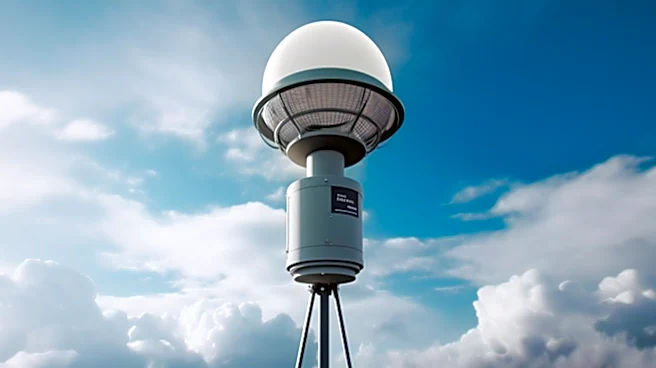
Missouri Governor Mike Kehoe has approved funding for the installation of a new weather radar in Southeast Missouri, specifically in Van Buren, MO. This initiative aims to close a critical weather coverage gap in the region. State Representative Keith
Elliott, representing Missouri's 153rd district, initially raised the need for improved radar coverage in 2025 following severe weather and tornadoes that caused 12 fatalities, including 6 in his district. The current radar coverage from Paducah, KY, and Saint Louis, MO, is approximately 120 miles away from Van Buren, resulting in radar beams scanning storms at elevations between 10,000 and 12,000 feet, missing crucial lower-level storm activity where tornadoes often form. Governor Kehoe signed House Bill 2008 into law, securing the necessary funding for this project.
Why It's Important?
The installation of a new weather radar in Southeast Missouri is critical for public safety and disaster preparedness in a region prone to severe weather. The existing coverage gap has left communities vulnerable, as current radar systems are unable to effectively detect low-level atmospheric conditions essential for accurate tornado warnings and severe storm tracking. This investment directly addresses a significant deficiency in the state's weather monitoring infrastructure, potentially saving lives and reducing property damage by providing earlier and more precise warnings. The project highlights the importance of governmental response to natural disasters and the role of state-level funding in enhancing critical public services. The collaboration between state and local entities, including the City of Dexter's contribution, underscores a unified effort to protect citizens.
What's Next?
The new weather radar is planned for installation in 2027, with early estimates suggesting completion around March 2027, though more conservative projections place it after the spring storm season in summer 2027. The total cost to the state is $2 million, supplemented by an additional $396,000 from the City of Dexter, Missouri, utilizing reallocated grant money. During the construction and implementation phase, coordination between state agencies, weather experts, and local communities will be essential to ensure the radar's optimal placement and integration into existing weather monitoring networks. Once operational, the radar is expected to significantly enhance the National Weather Service's ability to issue timely and accurate warnings for Southeast Missouri, improving the region's resilience against severe weather events.
Beyond the Headlines
This project extends beyond immediate weather safety, touching upon broader issues of infrastructure investment and regional equity. The fact that a significant coverage gap persisted despite previous severe weather events raises questions about long-term planning and resource allocation for rural areas. The initiative also underscores the critical role of local representatives like State Representative Keith Elliott in advocating for their constituents' needs and securing state-level support for vital projects. Furthermore, the technical challenge of radar beam elevation highlights the complexities of meteorological science and the continuous need for technological upgrades to improve forecasting capabilities. This investment could serve as a model for other states facing similar geographical or infrastructural challenges in weather monitoring.