



What's Happening?
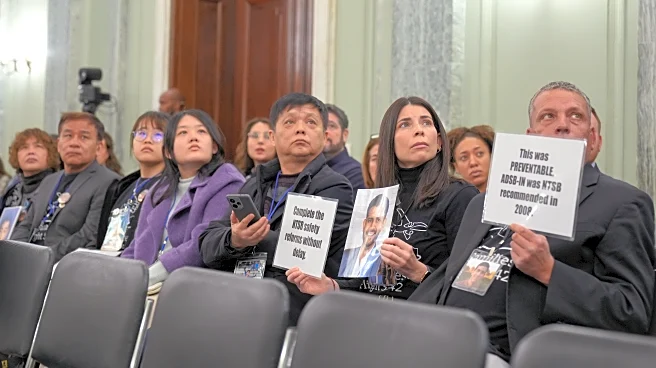
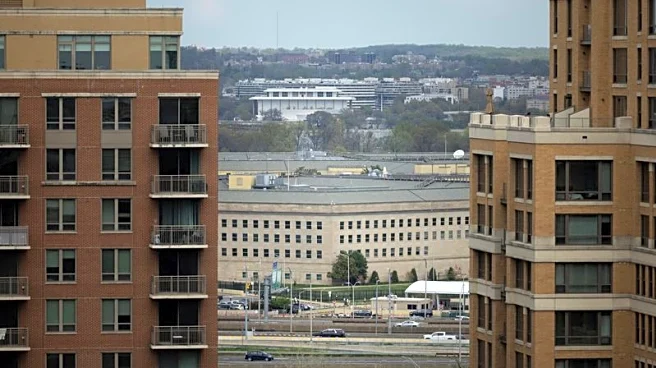
The Pentagon has opposed a bipartisan bill aimed at preventing midair collisions like the one that occurred 13 months ago between an Army helicopter and an American Airlines flight near Reagan National Airport. The bill, known as the Rotor Act, had passed
the Senate unanimously and was expected to pass the House. However, the Defense Department argued that the bill posed operational security risks, leading to its failure to secure the necessary votes. The bill was designed to implement safety measures recommended by the National Transportation Safety Board (NTSB) to prevent similar accidents.
Why It's Important?
The Pentagon's opposition to the Rotor Act raises concerns about the balance between national security and public safety. The failure to pass the bill means that critical safety recommendations from the NTSB remain unimplemented, potentially leaving airspace vulnerable to similar accidents. This situation highlights the complexities of legislative processes and the influence of military priorities on public policy, affecting stakeholders such as aviation groups, victims' families, and the general public.
What's Next?
The legislative process may see renewed efforts to address the safety concerns highlighted by the NTSB. Lawmakers may need to negotiate further with the Pentagon to find a compromise that addresses both security and safety needs. The ongoing dialogue between Congress, the military, and aviation stakeholders will be crucial in shaping future air safety regulations.