






What's Happening?
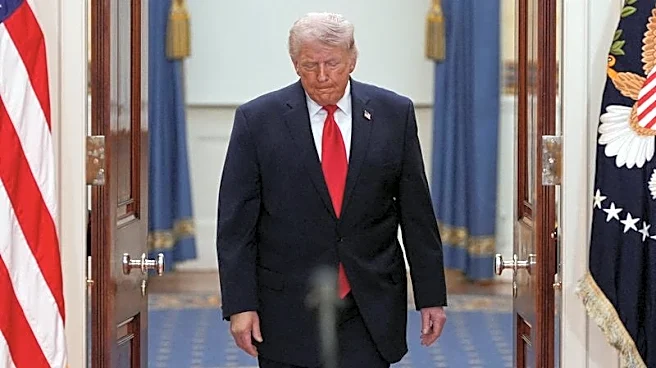
President Trump has announced that the U.S. military will initiate a blockade in the Strait of Hormuz starting at 10 a.m. on Monday. This decision comes as global energy costs continue to rise, impacting economies worldwide. The blockade is intended to exert
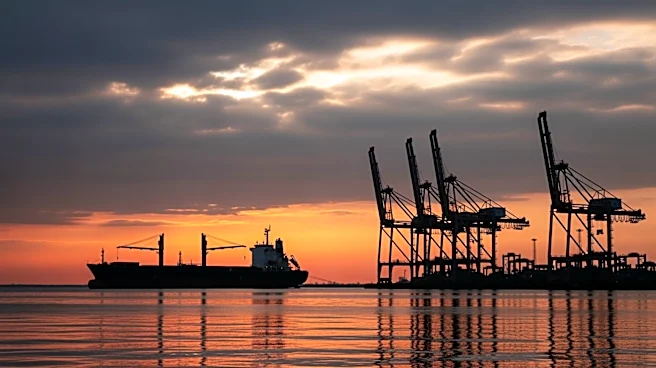
pressure on Iran, which has been a focal point of U.S. foreign policy due to its strategic location and influence in the region. The Strait of Hormuz is a critical passage for oil shipments, and any disruption could have significant implications for global energy markets. The announcement follows a period of heightened tensions between the U.S. and Iran, with previous sanctions and diplomatic efforts failing to resolve ongoing disputes.
Why It's Important?
The blockade of Iranian ports is a significant move that could further escalate tensions in the Middle East. It has the potential to disrupt global oil supply, leading to increased energy prices and economic instability. Countries reliant on oil imports from the region may face challenges in securing energy resources, which could affect industries and consumers alike. The decision underscores the U.S.'s strategic interests in maintaining control over key maritime routes and its commitment to countering Iranian influence. This action may also impact diplomatic relations with other nations involved in the region, as they navigate the complexities of international trade and security.
What's Next?
The blockade is likely to provoke reactions from Iran and other stakeholders in the region. Iran may seek to challenge the blockade through diplomatic or military means, potentially leading to further conflict. International bodies and allies of the U.S. may call for negotiations to prevent escalation and ensure stability in the region. The U.S. government will need to manage the geopolitical implications of this decision, balancing its strategic objectives with the potential for increased hostilities. Monitoring the situation closely will be crucial for policymakers and businesses affected by changes in energy supply and prices.
Beyond the Headlines
The decision to blockade Iranian ports raises questions about the ethical implications of using military force to influence economic conditions. It highlights the complex interplay between energy security and international diplomacy, as nations grapple with the consequences of such actions. The move may also prompt discussions on the long-term sustainability of relying on oil as a primary energy source, encouraging investment in alternative energy solutions. Additionally, the blockade could influence public opinion on U.S. foreign policy, as citizens and advocacy groups weigh the costs and benefits of military interventions.