

What's Happening?
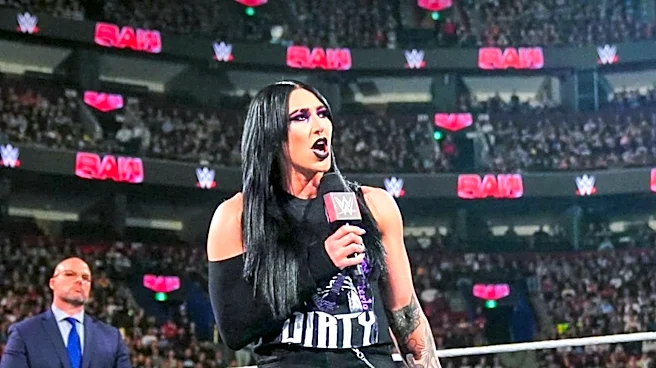
A 64-year-old man from Western Pennsylvania was allegedly defrauded of $42,700 by an individual posing as former WWE Women's Champion Rhea Ripley. The incident occurred in March when the victim was contacted by someone he believed to be the WWE Superstar.
Pennsylvania State Police in Kittanning reported the scam, though further details regarding the specifics of how the money was taken were limited. Notably, the victim later refused to cooperate with the ongoing investigation. Following the public disclosure of this scam, WWE's General Manager of Monday Night Raw, Adam Pearce, issued a warning on social media, advising fans that no one in WWE would ever ask them for money. Rhea Ripley, who is currently off television due to an injury, has not yet made any public comments regarding her name being used in this alleged scam.
Why It's Important?
This incident highlights the pervasive issue of online impersonation and financial scams, particularly those targeting fans of public figures. The use of a well-known personality like Rhea Ripley, a former WWE Women's Champion, lends credibility to the scammer's approach, making it easier to deceive unsuspecting individuals. The significant amount of money lost by the Pennsylvania man underscores the severe financial consequences these scams can have on victims. Furthermore, the victim's subsequent refusal to cooperate with the investigation could impede efforts to identify and prosecute the perpetrator, potentially allowing similar scams to continue. The public warning from WWE official Adam Pearce is crucial in raising awareness among fans about these fraudulent activities, emphasizing the responsibility of public figures and organizations to protect their audience from exploitation.
What's Next?
The Pennsylvania State Police investigation into the scam is ongoing, though it faces challenges due to the victim's refusal to cooperate. Law enforcement will likely continue to gather any available evidence to identify the individual responsible for impersonating Rhea Ripley and defrauding the man. WWE, through its officials like Adam Pearce, will likely continue to issue warnings to its fanbase about online scams to prevent further incidents. It remains to be seen if Rhea Ripley will publicly address the use of her name in this scam once she returns to the public eye, which could further help in raising awareness and deterring future impersonators. The broader implications suggest a continued need for vigilance and education regarding online safety and financial fraud, especially for individuals who engage with celebrities and public figures on social media platforms.
Beyond the Headlines
This scam delves into the psychological manipulation often employed by fraudsters, who exploit parasocial relationships that fans develop with celebrities. The perceived authenticity of direct communication from a beloved star can override critical judgment, leading individuals to fall victim to elaborate schemes. The incident also raises questions about the responsibility of social media platforms and public figures in preventing such impersonations and scams. While WWE has issued a warning, the ease with which scammers can create convincing fake profiles remains a challenge. This event serves as a stark reminder of the digital vulnerabilities that exist, where trust can be weaponized, and the lines between genuine interaction and malicious intent can become dangerously blurred, impacting individuals' financial well-being and emotional security.