
What's Happening?
Julia Curlee, an openly transgender former CIA officer, has warned that political interference from the White House is undermining U.S. intelligence capabilities. Curlee, who served for nearly 20 years and was abruptly fired early in President Trump's
second term, stated that experts with decades of experience are being driven out of the intelligence community. She claims that individuals are targeted either for their identity or for providing information that does not align with the President's preferences. Additionally, Curlee highlighted the 'neutering' of the National Security Council, which she asserts has led to a breakdown in coordination among key departments like State, Defense, and the CIA. This breakdown, she argues, has resulted in a failure to plan for foreseeable outcomes, such as the closing of the Strait of Hormuz during the war in Iran, leaving half a million Americans stranded.
Why It's Important?
The concerns raised by Julia Curlee are significant as they point to a potential degradation of U.S. national security. The alleged politicization of intelligence and the removal of experienced personnel could compromise the accuracy and objectivity of information provided to decision-makers. A weakened National Security Council, as described by Curlee, suggests a critical flaw in interagency coordination, which is vital for effective national security planning and crisis response. This situation could lead to poorly informed policy decisions, increased risks in military engagements, and a diminished capacity to protect American citizens abroad. The departure of seasoned intelligence officers due to political pressure also represents a substantial loss of institutional knowledge and expertise, which is difficult to replace and could have long-term detrimental effects on the intelligence community's effectiveness.
What's Next?
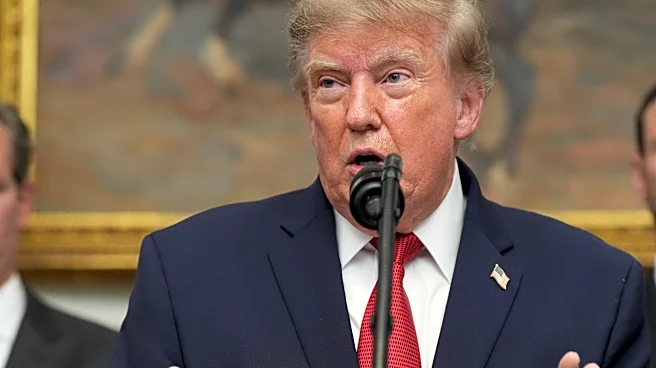
The White House, through spokesperson Anna Kelly, has dismissed Curlee's claims, asserting President Trump's authority to remove executive branch officials and criticizing her for 'bragging about themselves while attacking the president.' This response indicates a continued stance of rejecting criticism regarding intelligence matters. The intelligence community may face ongoing challenges in retaining experienced personnel and maintaining its independence if these trends persist. The long-term impact could include a brain drain from intelligence agencies, making it harder to recruit and train future experts. The public discourse around the politicization of intelligence is likely to continue, potentially influencing future policy debates and public trust in government institutions. The implications for U.S. foreign policy and military operations, particularly in volatile regions like the Middle East, remain a critical concern.
Beyond the Headlines
Curlee's experience highlights deeper issues concerning the role of truth and expertise in government, particularly within sensitive national security sectors. Her firing as an openly transgender woman, coupled with her assertion that she was targeted for her identity, raises questions about diversity and inclusion within the intelligence community and the broader federal workforce. The narrative of 'speaking truth to power' versus 'personal loyalty' underscores a fundamental tension in democratic governance. The alleged 'body count' and 'purge' of experts, as described by Curlee, suggest a shift towards an environment where conformity is prioritized over critical analysis, potentially leading to a less resilient and adaptable national security apparatus. This situation could also fuel public cynicism regarding the integrity of government institutions and the motivations behind policy decisions.