
What's Happening?
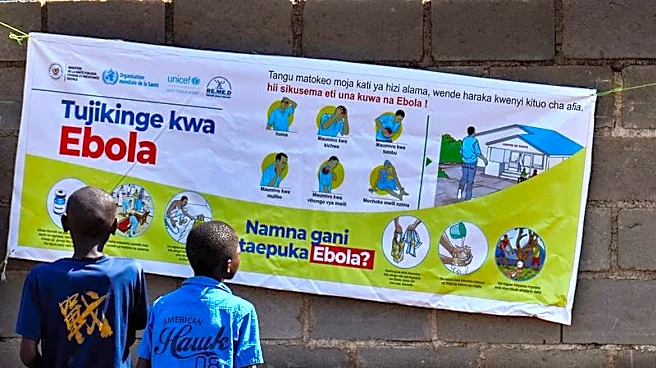
The U.S. Centers for Disease Control and Prevention (CDC) has issued a warning that the current Ebola outbreak in Africa could become one of the largest on record if immediate measures are not taken. The outbreak,
primarily affecting the Democratic Republic of Congo and Uganda, has been declared an international health emergency by the World Health Organization. CDC projections suggest that without significant intervention, the outbreak could result in over 20,000 cases within the next three months. The CDC emphasizes the need for large-scale public health interventions, similar to those used during the 2014 West Africa outbreak, to prevent a worst-case scenario.
Why It's Important?
The potential scale of the Ebola outbreak poses a significant threat to global health, particularly in regions with limited healthcare infrastructure. The outbreak's expansion could lead to increased mortality rates and strain on international health resources. For the U.S., while the immediate risk remains low, the situation underscores the importance of maintaining robust global health surveillance and response capabilities. The outbreak also highlights the need for international cooperation and support to contain infectious diseases, which can have far-reaching impacts on global health security and economic stability.
What's Next?
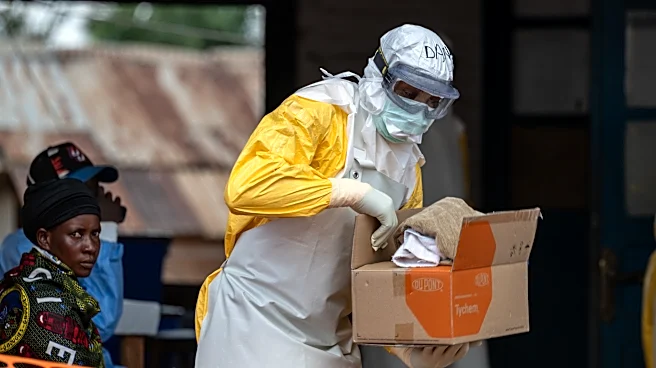
Efforts to contain the outbreak will require coordinated international support, including increased funding and resources for affected regions. The CDC and other health organizations are likely to ramp up efforts to isolate cases and conduct contact tracing to limit the spread. The situation may prompt discussions on improving global health infrastructure and preparedness for future outbreaks. Additionally, the U.S. may need to reassess its role in international health responses, given past leadership in managing similar crises.