
What's Happening?
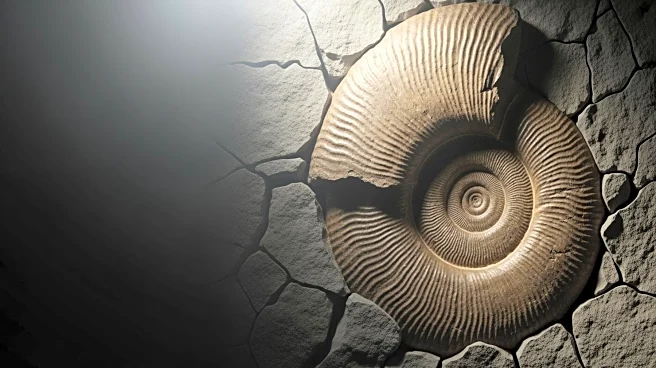
A new study published in Scientific Reports suggests that ammonites, marine creatures with coiled shells, survived the mass extinction event caused by the asteroid impact that wiped out the dinosaurs 66
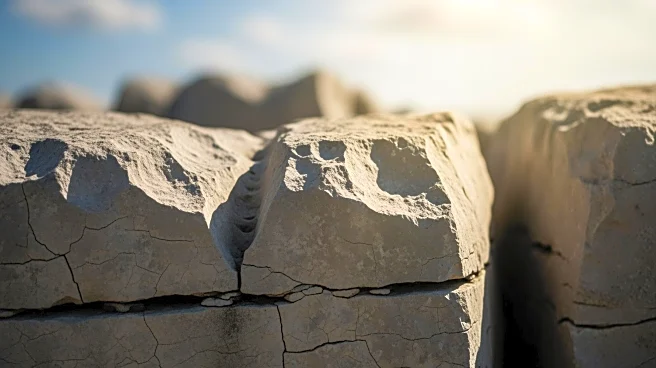
million years ago. Researchers, led by Professor Marcin Machalski of the Polish Academy of Sciences, studied ammonite fossils at Stevns Klint in Denmark, a UNESCO World Heritage Site. The team found ammonite fossils above the K-Pg boundary line, indicating that these creatures may have survived into the Danian period, the earliest part of the Paleogene period. The researchers performed microfacies analysis to compare the sediment inside the fossil shells with surrounding rock layers, finding evidence that ammonites were living in the post-extinction sea during the Danian.
Why It's Important?
The findings challenge the long-held belief that ammonites perished alongside the dinosaurs at the K-Pg boundary. If ammonites did survive the initial impact, it raises questions about the resilience of marine life and the factors that contributed to their eventual extinction. This discovery could reshape our understanding of the aftermath of the asteroid impact and the recovery of marine ecosystems. The study also highlights the importance of detailed paleontological research in uncovering new insights into Earth's history and the evolution of life.
What's Next?
The study opens new avenues for research into the survival mechanisms of ammonites and other marine species during mass extinction events. Further investigations could focus on the environmental conditions that allowed ammonites to survive temporarily and the eventual factors that led to their extinction. Understanding these dynamics could provide valuable insights into the resilience of marine ecosystems and inform current conservation efforts in the face of environmental changes.