




What's Happening?
The Trump administration has announced new economic sanctions targeting Iran's oil trade, as part of ongoing efforts to pressure Tehran into negotiations. The Department of the Treasury's Office of Foreign Assets Control (OFAC) has designated 12 individuals
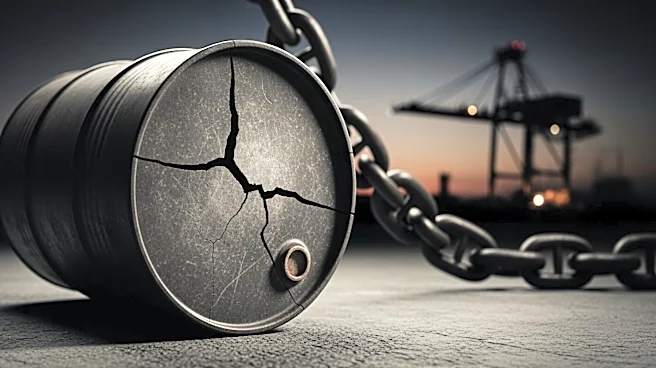
and entities for their roles in facilitating the sale and shipment of Iranian oil to China. These sanctions are part of a broader strategy, dubbed 'Economic Fury,' aimed at depriving Iran of funding for its weapons programs and nuclear ambitions. The U.S. is also expanding a naval blockade to restrict Iran's oil exports, with reports indicating that Iran has not successfully exported crude oil by sea in recent weeks.
Why It's Important?
The increased economic pressure on Iran is a critical component of the U.S. strategy to curb Tehran's influence and nuclear capabilities. By targeting Iran's oil trade, the U.S. aims to cut off a significant source of revenue for the Iranian regime, potentially weakening its ability to fund military and nuclear activities. These measures could also impact global oil markets, as Iran is a major oil producer. The sanctions and blockade may lead to heightened tensions in the region, with potential implications for international trade and energy security.
What's Next?
The effectiveness of the U.S. sanctions and blockade will depend on Iran's ability to withstand economic pressure and its willingness to engage in negotiations. The CIA estimates that Iran can endure the blockade for several more months, but the economic strain may eventually force Tehran to reconsider its position. The international community, including key U.S. allies, will likely monitor the situation closely, as any escalation could have far-reaching consequences for regional stability and global markets. Diplomatic efforts may be necessary to prevent further conflict and encourage a peaceful resolution.