



What's Happening?
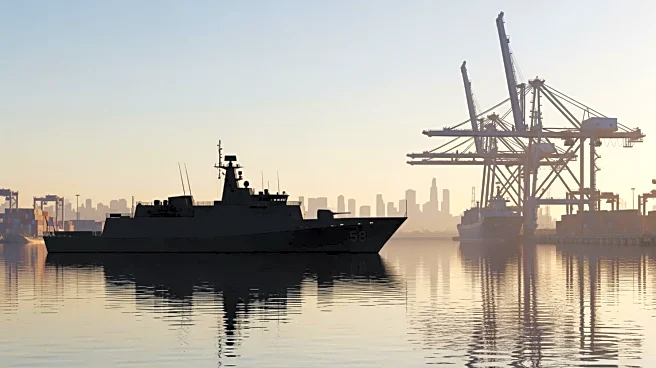
The U.S. Navy has repositioned two of its counter-mine vessels, the USS Santa Barbara and USS Tulsa, from their homeport in Bahrain to Singapore. This move is part of a strategic realignment within the U.S. Seventh Fleet's area of responsibility. The ships,
equipped with mine countermeasures mission packages, are designed to detect and destroy naval mines. They made a port call in Malaysia before arriving in Singapore, where they will undergo scheduled maintenance and logistics operations. This relocation follows the decommissioning of four Avenger-class mine countermeasures ships in the Middle East in 2025, which were replaced by Independence-class littoral combat ships. The U.S. Navy's decision to operate these ships primarily from Singapore is part of an agreement between the two nations, allowing for enhanced logistical support and maintenance capabilities.
Why It's Important?
The relocation of these counter-mine ships to Singapore underscores the strategic importance of the region in maintaining maritime security and freedom of navigation. The presence of these vessels in Singapore enhances the U.S. Navy's ability to respond to potential threats in the Indo-Pacific region, a critical area for global trade and security. This move also reflects a shift in U.S. naval strategy, focusing on flexibility and rapid deployment capabilities. The strategic positioning of these ships could deter potential adversaries and reassure allies of the U.S. commitment to regional stability. Additionally, the use of Singapore as a logistics hub highlights the importance of international partnerships in maintaining a robust naval presence in key maritime regions.
What's Next?
The U.S. Navy is likely to continue its strategic realignment in the Indo-Pacific region, potentially increasing its presence and capabilities in response to evolving security challenges. The repositioning of these ships may lead to further collaborations with regional allies, enhancing joint maritime security efforts. The Navy's focus on maintaining a flexible and responsive force could result in additional deployments or exercises in the region, aimed at strengthening deterrence and ensuring the security of critical sea lanes. The ongoing geopolitical dynamics in the region, including tensions in the South China Sea, may influence future naval operations and strategic decisions.