

What's Happening?
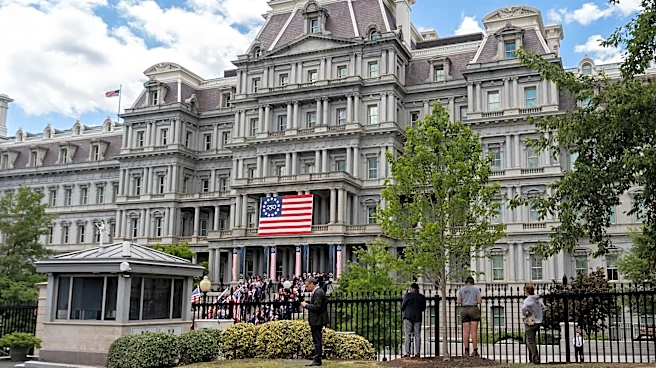
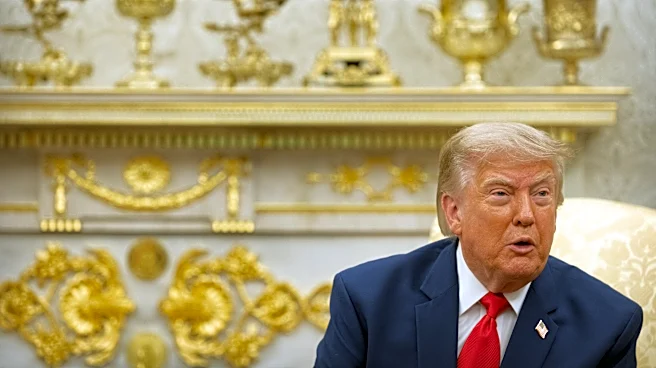
President Trump has significantly increased the presence of his image, name, and signature across various U.S. government institutions, public spaces, and official documents during his second term. This includes banners featuring his face on federal agencies
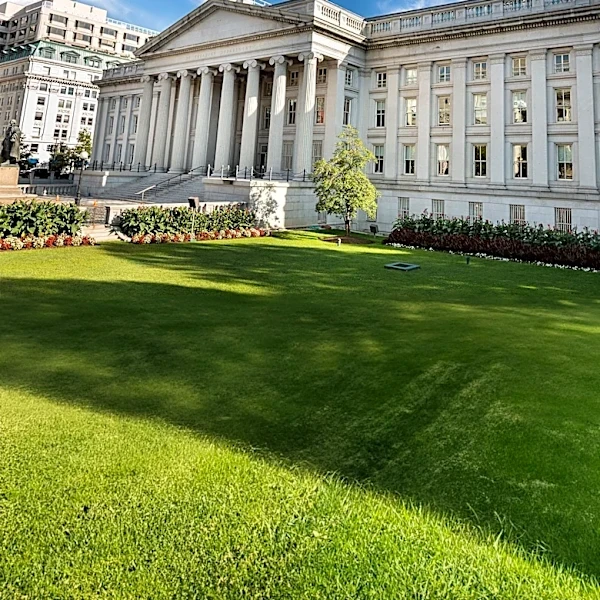
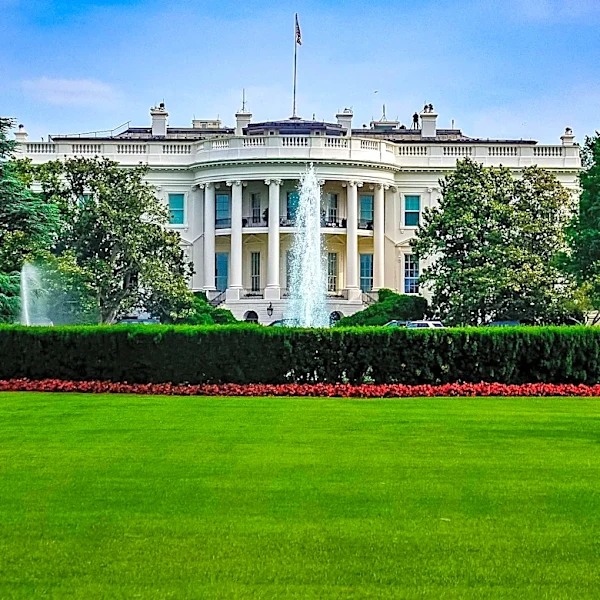
like the Labor, Justice, and Interior Departments, despite objections from Democrats regarding cost and message. The U.S. Institute of Peace and the John F. Kennedy Center for the Performing Arts have seen attempts to incorporate his name, with the latter briefly displaying 'Restored and Renovated by President Donald J. Trump' on its facade. His administration has also overseen the 'beautification' of Washington D.C., including changes to the Reflecting Pool. Inside the White House, portraits of President Trump have been added, and a 'Presidential Walk of Fame' featuring gold plaques and framed images of past presidents was unveiled. Official documents like the 'Patriot Passport' and National Parks passes now feature his face, and government websites for child-savings accounts, prescription drug costs (TrumpRx), and retirement savings (TrumpIRA) bear his name. The Treasury Department announced his signature would appear on future bills, and a $1 gold-colored coin with his face is planned. Additionally, plaques with his signature are on the border wall, and a 'Trump bridge' was unveiled in Tennessee, with Palm Beach International Airport renamed for him. Plans for a 'Trump-class' battleship fleet and an F-47 fighter jet, named in a nod to him, are also in motion.
Why It's Important?
The widespread proliferation of President Trump's image and name across government and public assets represents a significant departure from traditional U.S. presidential practices, which typically reserve such honors for former or deceased leaders. This trend raises critical questions about the separation of the presidency from the individual, the potential for a 'cult of personality' in American politics, and the appropriate use of public resources for personal branding. Historians and political scientists draw parallels to authoritarian regimes, where leaders' images are used to 'insert themselves into the social fabric' and convey an inseparable link between the leader and state institutions. This could normalize a practice that blurs the lines between political office and personal identity, potentially impacting public trust in government impartiality and the democratic process. The cost and message of these initiatives have already drawn criticism, indicating a contentious shift in how presidential legacies are established and perceived.
What's Next?
The future of these initiatives is uncertain, particularly if there is a change in presidential administration. While some elements, like banners on federal buildings, could be easily removed, others, such as changes to currency, monuments, or the naming of infrastructure projects, would be far more challenging to undo. A new administration might face pressure to reverse these changes, leading to potential political and legal battles over the legacy and symbolism of the Trump presidency. The ongoing debates over the cost and appropriateness of these actions are likely to continue, influencing public discourse on presidential power and the use of public funds. The long-term impact could be a re-evaluation of guidelines for presidential branding and memorialization, potentially leading to new policies aimed at preserving institutional neutrality and preventing similar widespread personalization of government assets.
Beyond the Headlines
Beyond the immediate political implications, this phenomenon delves into deeper cultural and psychological dimensions of leadership and national identity. The constant visual presence of President Trump's image could subtly influence public perception of the government, fostering a sense of personal allegiance to the leader rather than to the institutions themselves. This 'ubiquity,' as described by scholars, can inure citizens to shifts in their relationship with their government, potentially eroding democratic norms over time. It also raises ethical questions about the use of taxpayer money for what some perceive as self-aggrandizement. The comparison to historical figures like Hafez al-Assad and Mussolini, while not a direct equivalence, highlights concerns about the potential for such practices to undermine democratic principles and foster an environment where the leader's persona overshadows the collective identity of the nation. This development could spark a broader societal conversation about the symbols of power and the boundaries of presidential influence in a democratic republic.