






What's Happening?
A potential strike by approximately 250 security workers at the Ports of Los Angeles and Long Beach has been averted, at least temporarily, as the employer group and the International Longshore and Warehouse Union (ILWU) Local 26 agreed to extend their
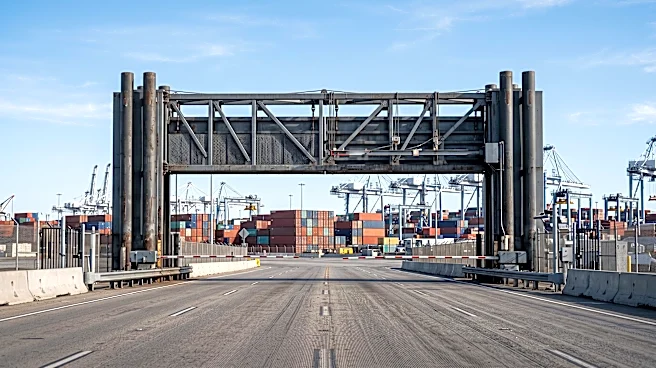
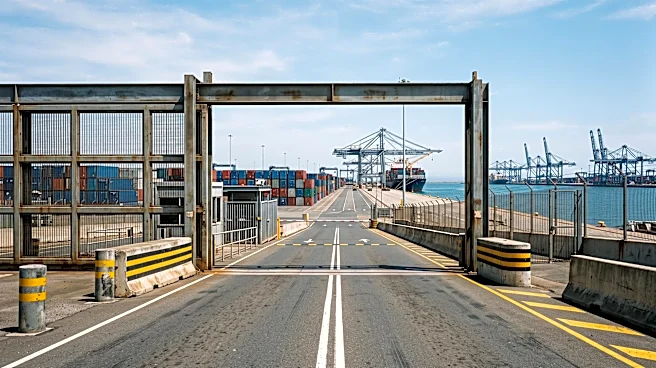
bargaining deadline through November 20. The Pacific Maritime Association (PMA), representing port terminals and ocean carriers, confirmed that additional talks are scheduled with the union during this period. This marks several extensions, as the previous contract expired in July 2025, and deadlines were previously extended from November 1 to November 4, and then to November 6. The union watchmen, who are members of Local 26, are responsible for controlling and inspecting truck and employee entries at terminal gates, providing terminal security, and guarding and tracking critical cargo on the docks. A strike by these workers could significantly disrupt operations, potentially affecting terminals handling about 85% of Port of Long Beach cargo and a third of Port of Los Angeles cargo.
Why It's Important?
The Ports of Los Angeles and Long Beach collectively form the busiest port complex in the United States, handling approximately one-third of the nation's seaborne containerized goods. A strike by even a small percentage of workers, such as the 250 security personnel, could have cascading effects on national supply chains and the U.S. economy. These security workers are critical for maintaining the flow of goods, as they control access and track cargo, making their absence a significant bottleneck. Disruptions at these ports can lead to delays in product delivery, increased shipping costs, and potential shortages of goods across various industries. The timing is particularly sensitive as the ports have been experiencing record cargo volumes, and the Vincent Thomas Bridge, a key connector to major highways, is scheduled to close for repairs for over a year. A strike during this period would exacerbate existing logistical challenges, impacting businesses and consumers nationwide. The ongoing negotiations highlight the critical role of labor stability in maintaining economic fluidity.
What's Next?
The immediate next step involves continued negotiations between the Pacific Maritime Association and ILWU Local 26, with additional talks scheduled before the new November 20 deadline. These discussions will likely be facilitated by the Federal Mediation and Conciliation Service, which has been assisting the parties. All stakeholders, including port authorities, shipping companies, and businesses reliant on these ports, will closely monitor the progress of these negotiations. If an agreement is not reached by November 20, the threat of a strike will resurface, potentially leading to further extensions or a work stoppage. The PMA has previously warned that ILWU dockworkers and marine clerks, who have separate labor contracts, might stand in solidarity with Local 26 watchmen in the event of a strike, which could amplify the disruption. The outcome of these talks will determine the stability of operations at the nation's busiest port complex in the coming weeks.
Beyond the Headlines
This labor dispute, while seemingly localized, underscores broader issues within the U.S. supply chain and labor relations. The critical role of a relatively small group of workers in maintaining the flow of goods highlights the interconnectedness and fragility of modern logistics networks. It also brings to light the ongoing power dynamics between labor unions and employer associations in essential industries. The repeated extensions of the bargaining deadline suggest a mutual desire to avoid a strike, indicating an understanding of the significant economic repercussions. However, it also reflects the difficulty in reaching a mutually agreeable contract. This situation could influence future labor negotiations in other critical sectors, as both sides observe the strategies and outcomes. Furthermore, it emphasizes the need for robust contingency planning by businesses and policymakers to mitigate the impact of potential disruptions at key logistical hubs, reinforcing the importance of resilient supply chain strategies beyond just port operations.