






What's Happening?
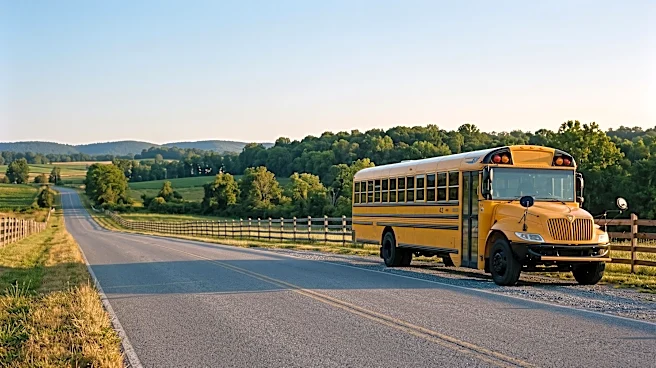
Parents in Harford County, Maryland, are rallying in support of Cynthia Morgan, a longtime school bus driver who was removed from her route after allegedly allowing a student to exit the bus to rescue an injured kitten. Morgan, who has driven for the district
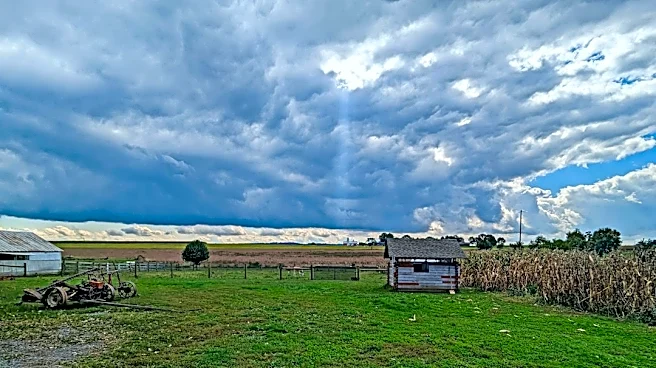
for 11 years, confirmed the account to CBS News Baltimore, expressing devastation over the decision. The incident occurred on Heaps School Road, a rural, low-traffic area, a detail parents emphasize as important to understanding the context. While parents acknowledge the safety concerns associated with a student leaving the bus, they believe Morgan's removal was an excessive reaction. They highlight Morgan's character, noting her generosity in buying school supplies and gifts for children on her route out of her own pocket. Harford County Public Schools stated that Morgan was employed by an independent contractor, not directly by the district, but the district is responsible for certifying drivers.
Why It's Important?
This incident is important because it highlights the tension between strict safety protocols and human compassion within public service roles, particularly those involving children. While student safety is paramount, as emphasized by Harford County Public Schools, the community's strong support for Cynthia Morgan suggests a desire for a more nuanced approach to disciplinary actions. The parents' perspective underscores the value of a caring and dedicated individual in a role that often extends beyond mere transportation. The removal of a driver with a long, positive history for an act perceived by many as compassionate, albeit a breach of protocol, raises questions about the flexibility and proportionality of disciplinary measures. It also brings to light the employment structure of school bus drivers, often through independent contractors, which can complicate accountability and employee protections. The community's reaction indicates a strong belief that the punishment does not fit the perceived 'crime,' potentially impacting morale among other school staff.
What's Next?
Harford County parents are actively circulating a petition calling for Cynthia Morgan's reinstatement to her bus route. This community action indicates a sustained effort to influence the decision made by the school district and the independent contractor, Cleary Inc., which employs Morgan. The school district has declined to comment on Morgan's specific situation, citing student safety as their top priority and stating that certification decisions consider multiple factors. Cleary Inc. has not yet responded to inquiries from CBS News Baltimore. The outcome will likely depend on the impact of the parents' petition and any further discussions between the school district, the contractor, and potentially Morgan herself. This situation could lead to a review of existing safety protocols and disciplinary guidelines for school bus drivers, potentially seeking a balance that allows for discretion in unusual circumstances while maintaining core safety standards. The incident may also prompt a broader discussion on the role of compassion in professional conduct.
Beyond the Headlines
Beyond the immediate controversy, this story touches on the broader societal debate about 'zero-tolerance' policies versus situational judgment. While safety protocols are crucial, rigid enforcement without considering context can sometimes lead to outcomes that feel unjust or disproportionate to the community. The outpouring of support for Cynthia Morgan reflects a public desire for empathy and human connection, especially in roles that interact with children. It also highlights the often-underappreciated role of school bus drivers, who frequently form significant bonds with the students they transport. The incident could serve as a case study for educational institutions and transportation companies to re-evaluate how they train and empower their staff to handle unexpected situations, and how disciplinary actions are communicated and perceived by the community. It also raises questions about the emotional labor involved in such roles and the potential for burnout when compassion is penalized. The story ultimately underscores the human element in public service and the complexities of balancing rules with real-world scenarios.