






What's Happening?
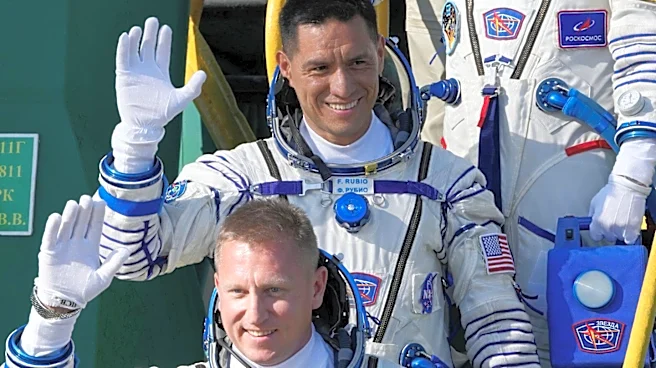
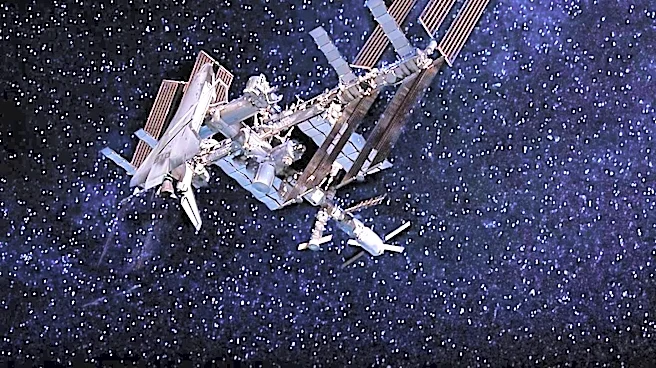
A U.S.-Russian space crew, consisting of NASA astronaut Chris Williams and Russian cosmonauts Sergei Kud-Sverchkov and Sergei Mikaev, successfully landed in Kazakhstan after an eight-month mission aboard the International Space Station (ISS). The crew's
Soyuz MS-28 spacecraft touched down smoothly by parachute in a designated area southeast of Dzhezkazgan. This mission marked the first space journey for Williams and Mikaev, while it was the second for Kud-Sverchkov. Following their return, Williams will head to NASA’s Johnson Space Center in Houston, and the Russian cosmonauts will return to their training base near Moscow. Despite geopolitical tensions, the U.S. and Russia continue to collaborate on space projects, maintaining a partnership that dates back to the Cold War.
Why It's Important?
The successful return of the U.S.-Russian crew underscores the ongoing cooperation between the two nations in space exploration, despite strained relations due to geopolitical conflicts, such as Russia's actions in Ukraine. This collaboration is crucial for the continued operation and success of the ISS, which relies on international partnerships. The mission highlights the ability of space exploration to transcend political tensions, fostering scientific and technological advancements. The continued partnership also ensures the sharing of resources and expertise, which is vital for the safety and success of missions involving human spaceflight.
What's Next?
The next steps involve the crew's debriefing and health assessments, which are standard procedures following long-duration space missions. The newly arrived crew at the ISS, including NASA astronaut Anil Menon and Roscosmos cosmonauts Pyotr Dubrov and Anna Kikina, will continue their mission, contributing to ongoing research and experiments. Future collaborations between NASA and Roscosmos are expected to continue, with both agencies planning further missions to the ISS. The ongoing partnership may also pave the way for future joint missions beyond low Earth orbit, potentially involving lunar or Mars exploration.