





What's Happening?
The World Food Program (WFP) has significantly scaled back food and cash assistance to displaced Palestinians in the Gaza Strip due to severe funding shortages. This reduction affects approximately 500,000 individuals who rely on these distributions.
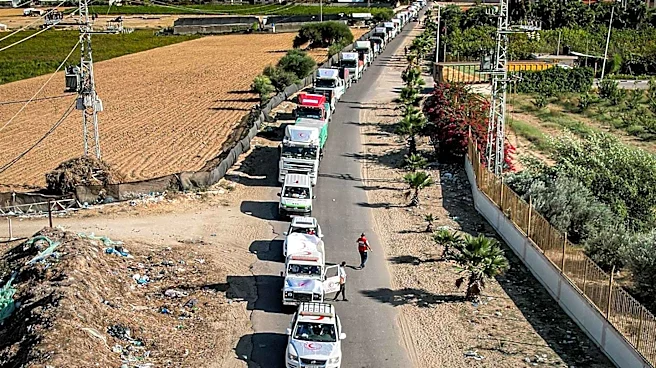
Community kitchens have seen a decrease in hot meals provided daily, from around 250,000 to 150,000. Aid involving flour, food parcels, and cash transfers has also been cut. These reductions occur amidst widespread unemployment and Israeli restrictions that continue to hinder the entry of humanitarian supplies into Gaza. Palestinian factions, local organizations, and displaced residents have protested these cuts, demanding the restoration of assistance. The situation has intensified fears of a renewed wave of hunger and malnutrition in the region.
Why It's Important?
The reduction in aid by the World Food Program carries significant humanitarian implications, particularly for the hundreds of thousands of displaced Palestinians in Gaza. This move exacerbates an already dire situation, increasing the risk of widespread hunger and malnutrition. The cuts place immense pressure on families who are already struggling to afford basic necessities due to economic hardship and limited access to markets. The inability to secure adequate food supplies can lead to severe health crises, especially among vulnerable populations like children and the elderly. Furthermore, the protests against these aid reductions highlight growing social unrest and desperation within the affected communities, potentially leading to further instability in the region. The ongoing restrictions on humanitarian supplies also underscore the complex challenges in delivering aid to conflict zones.
What's Next?
The immediate future will likely see continued efforts by Palestinian factions and humanitarian groups to pressure the World Food Program and international donors to restore and increase aid to Gaza. The WFP will need to address its funding shortfalls, potentially through renewed appeals to member states and private donors. The humanitarian situation is expected to worsen if aid levels are not reinstated, leading to increased calls for international intervention and greater access for humanitarian convoys. There may also be further protests and demonstrations as the affected population grapples with deepening food insecurity. The long-term implications could include a significant increase in malnutrition rates and related health issues, requiring extensive recovery efforts even if the conflict subsides.
Beyond the Headlines
The aid reductions in Gaza highlight a broader issue of humanitarian funding shortfalls and the politicization of aid in conflict zones. The reliance on external aid for basic survival underscores the fragility of the region's infrastructure and economy, which has been severely impacted by ongoing conflict and restrictions. This situation also brings to light the ethical dilemmas faced by international organizations when funding becomes scarce, forcing them to make difficult decisions about who receives aid and how much. The protests and calls for restored assistance reflect a deep-seated frustration and a sense of abandonment among the displaced population. This crisis could also fuel narratives of neglect and injustice, potentially exacerbating existing tensions and hindering future peace efforts.