



What's Happening?
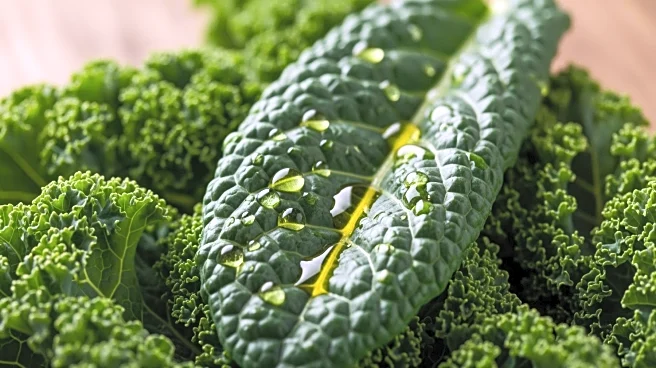
Researchers at the University of Missouri have discovered that pairing kale with a water-and-olive-oil nanoemulsion significantly boosts the absorption of its nutrients. The study, published in the journal Food Nutrition, used a lab model to simulate
human digestion and found that this simple addition enhances the uptake of carotenoids, which are beneficial for health. Kale, known for its rich nutrient profile including vitamins A, B6, C, K, folate, fiber, and manganese, can be made even more nutritious by adding olive oil. The research suggests that even a basic drizzle of olive oil can make a substantial difference in nutrient absorption, whether the kale is raw or cooked.
Why It's Important?
This finding is significant as it offers a simple method to enhance the nutritional benefits of kale, a popular vegetable in the U.S. with sales reaching $104 million in 2024. By improving nutrient absorption, consumers can maximize the health benefits of kale without altering their usual preparation methods. This could lead to better dietary practices and improved public health outcomes, as carotenoids are known for their positive effects on overall health. The study also opens avenues for developing new dressings and sauces that could enhance nutrient uptake from other vegetables, potentially revolutionizing how people consume and benefit from plant-based foods.
What's Next?
The research team plans to continue developing dressings and sauces that further enhance nutrient absorption from kale and other vegetables. This could lead to new products in the market that make vegetables more nutritious and appealing. The ongoing research aims to advance food science and improve human health through innovative foods and technologies. As the team explores these possibilities, consumers might soon see new options in grocery stores that offer enhanced nutritional benefits.
Beyond the Headlines
The study highlights the importance of dietary fat in the absorption of fat-soluble vitamins, which could influence dietary guidelines and recommendations. It also underscores the potential for food science to drive meaningful changes in global nutrition and well-being. By focusing on simple, accessible solutions like olive oil, the research aligns with broader efforts to improve public health through better nutrition.